Glass Tent Wedding Flowers Near Quimper: Creating a Garden Feeling Under Glass
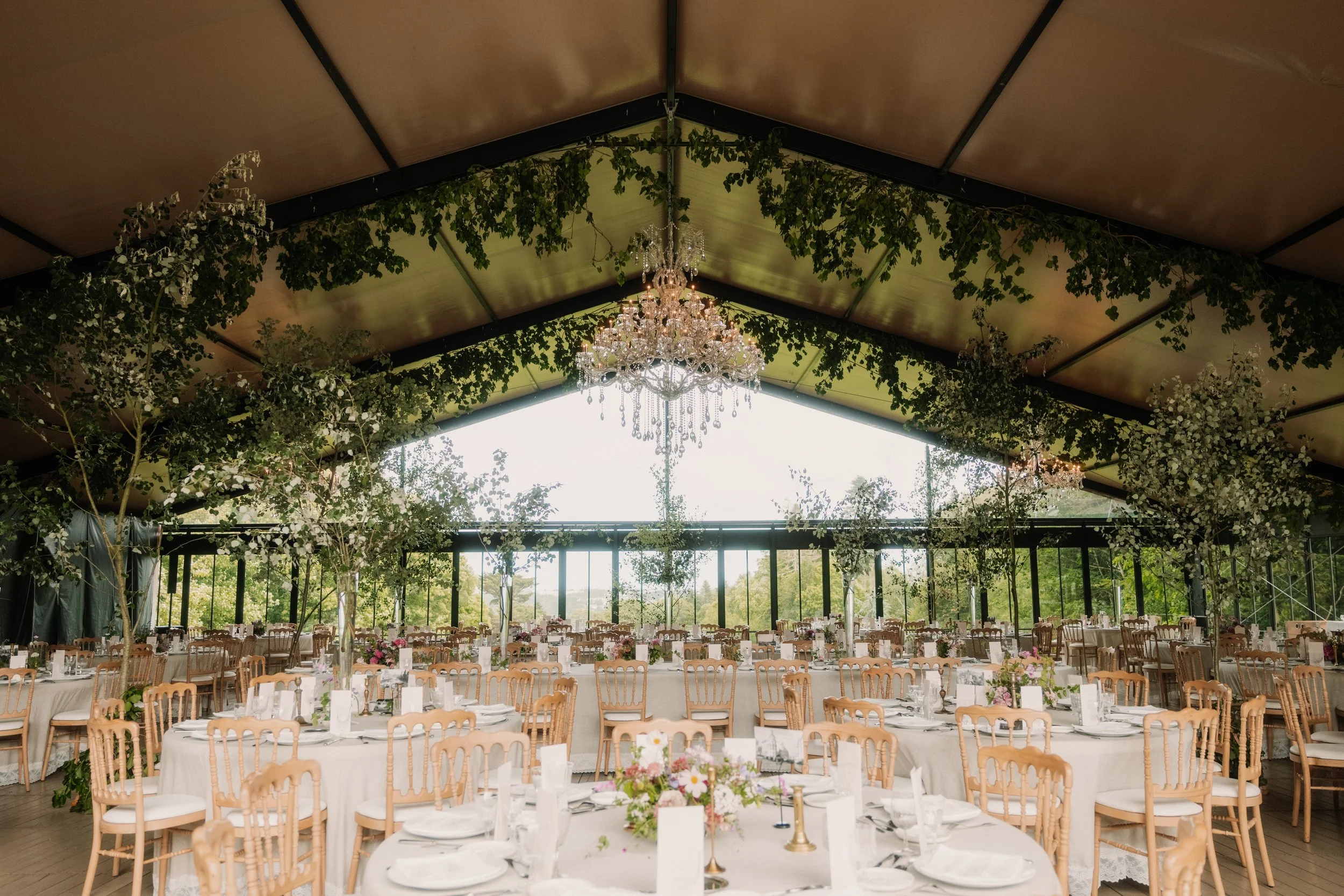
Some weddings begin with a colour palette. This one began with a place.
The groom’s family wanted to receive everyone at home, on a private family estate near Quimper, in Brittany. His father was from the region, the property had become part of the family story, and it made sense for them to gather their guests there. That was the first thing I kept in mind while designing the flowers.
There were 250 guests, a glass tent to build on sloped ground, a raised floor, several outdoor areas, a large reception space, and a lot of movement between the house, the garden and the tent. The flowers had to follow all of that. They could not be treated as one separate decoration placed at the end.
Bringing the garden into the glass tent
The main idea was to bring the garden feeling inside the tent.
The bride’s family is Colombian, and there was a wish for something joyful, bright and alive. At the same time, the setting was very green, very connected to the estate, and the reception was happening under a large glass tent, almost like a greenhouse.
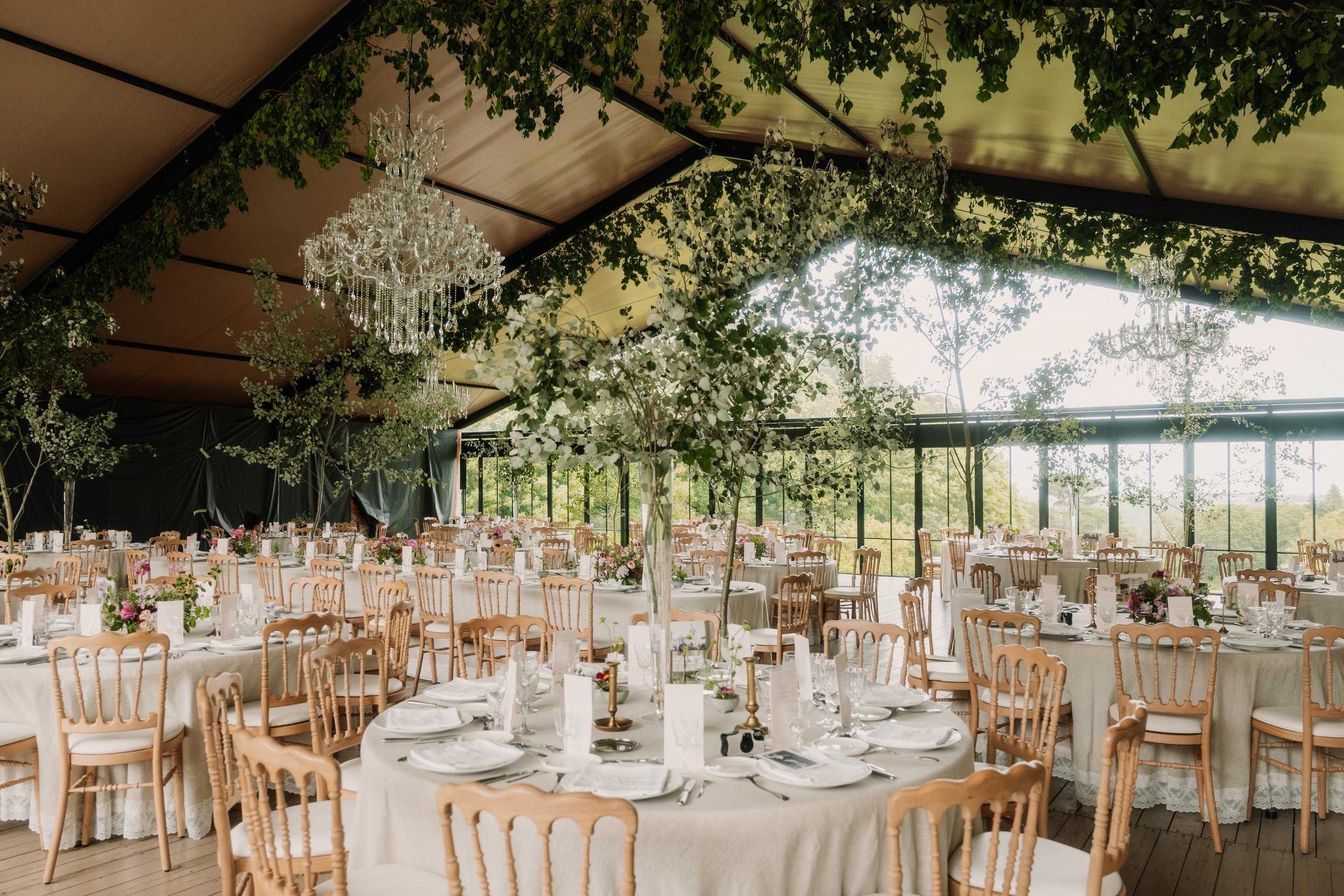
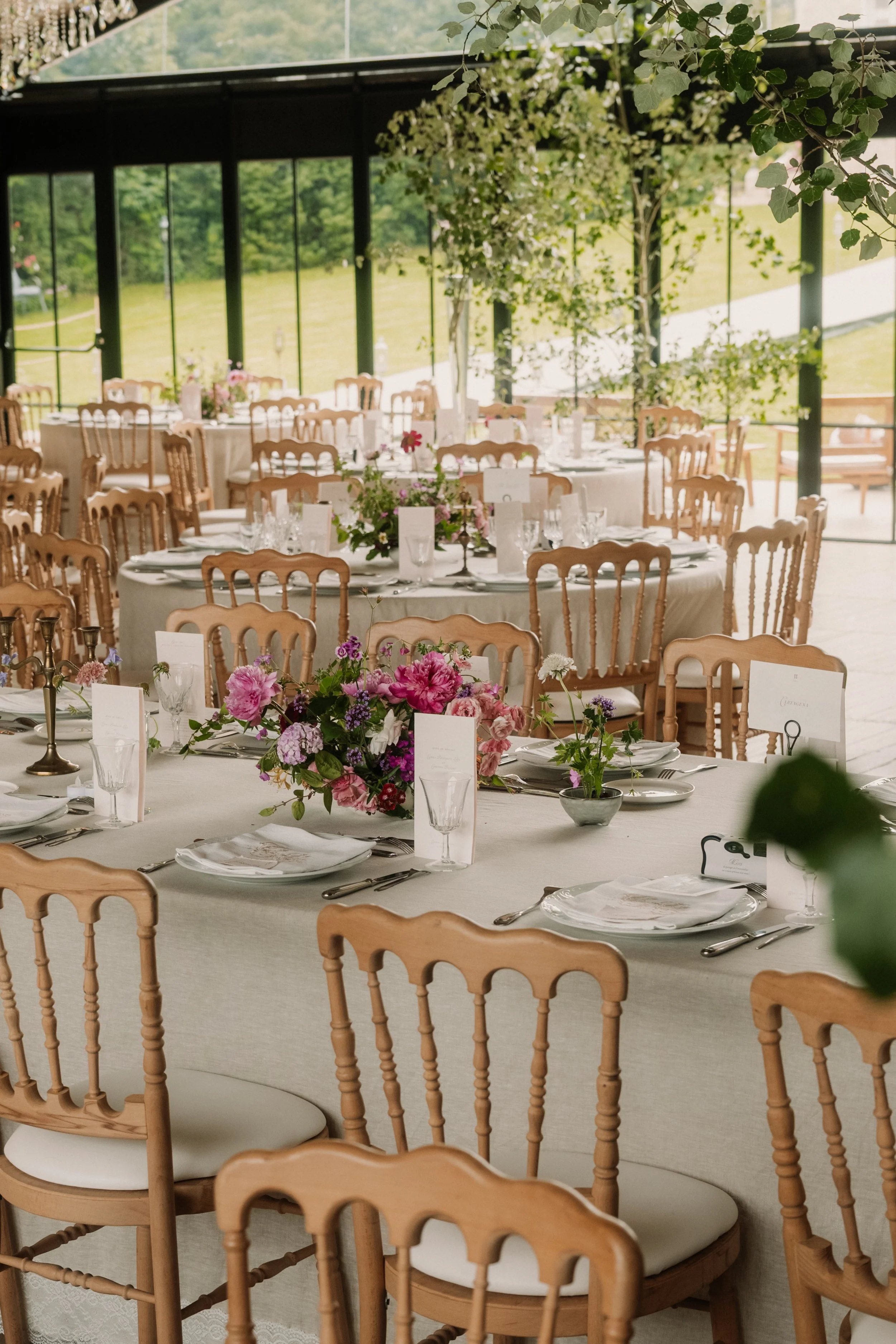
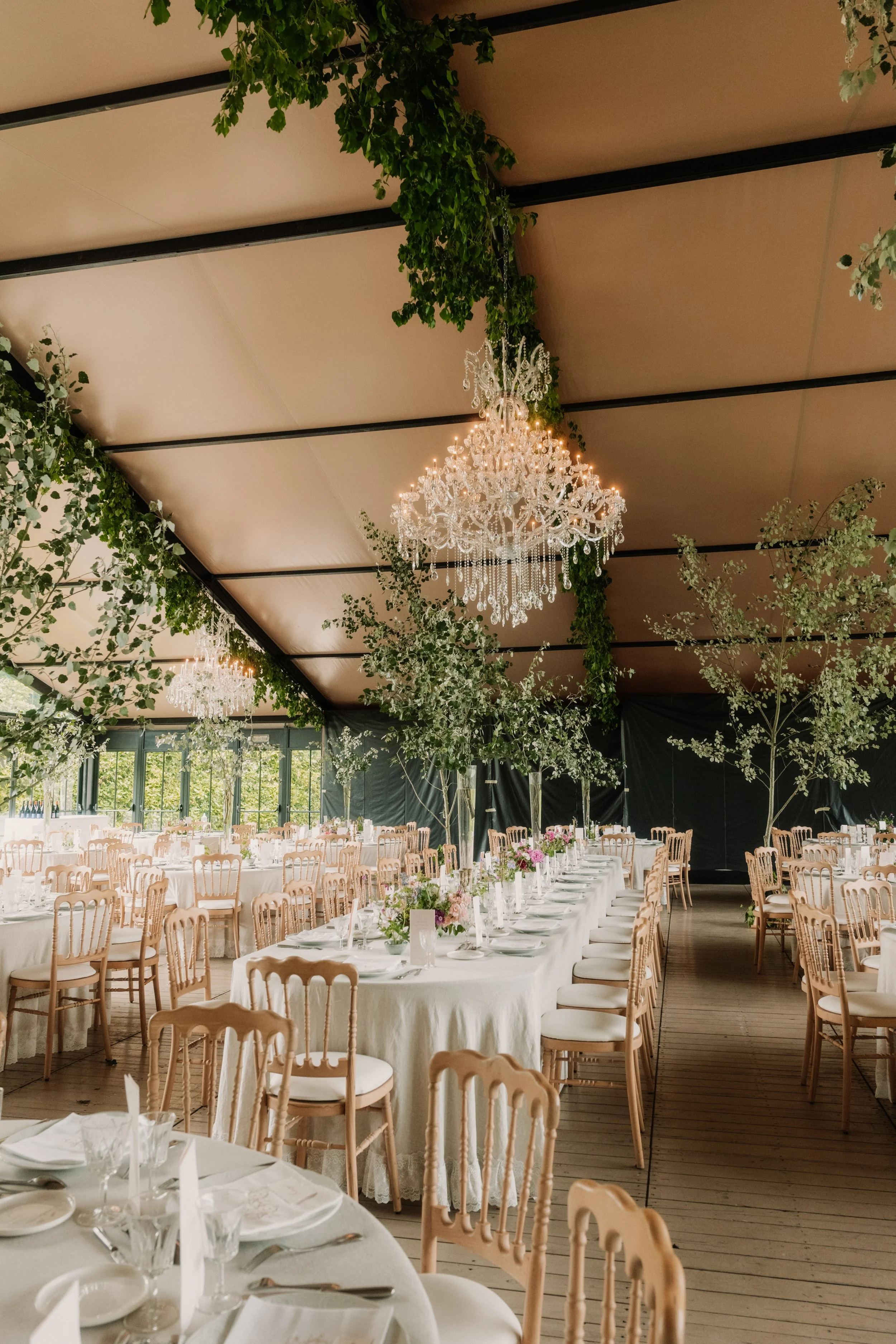
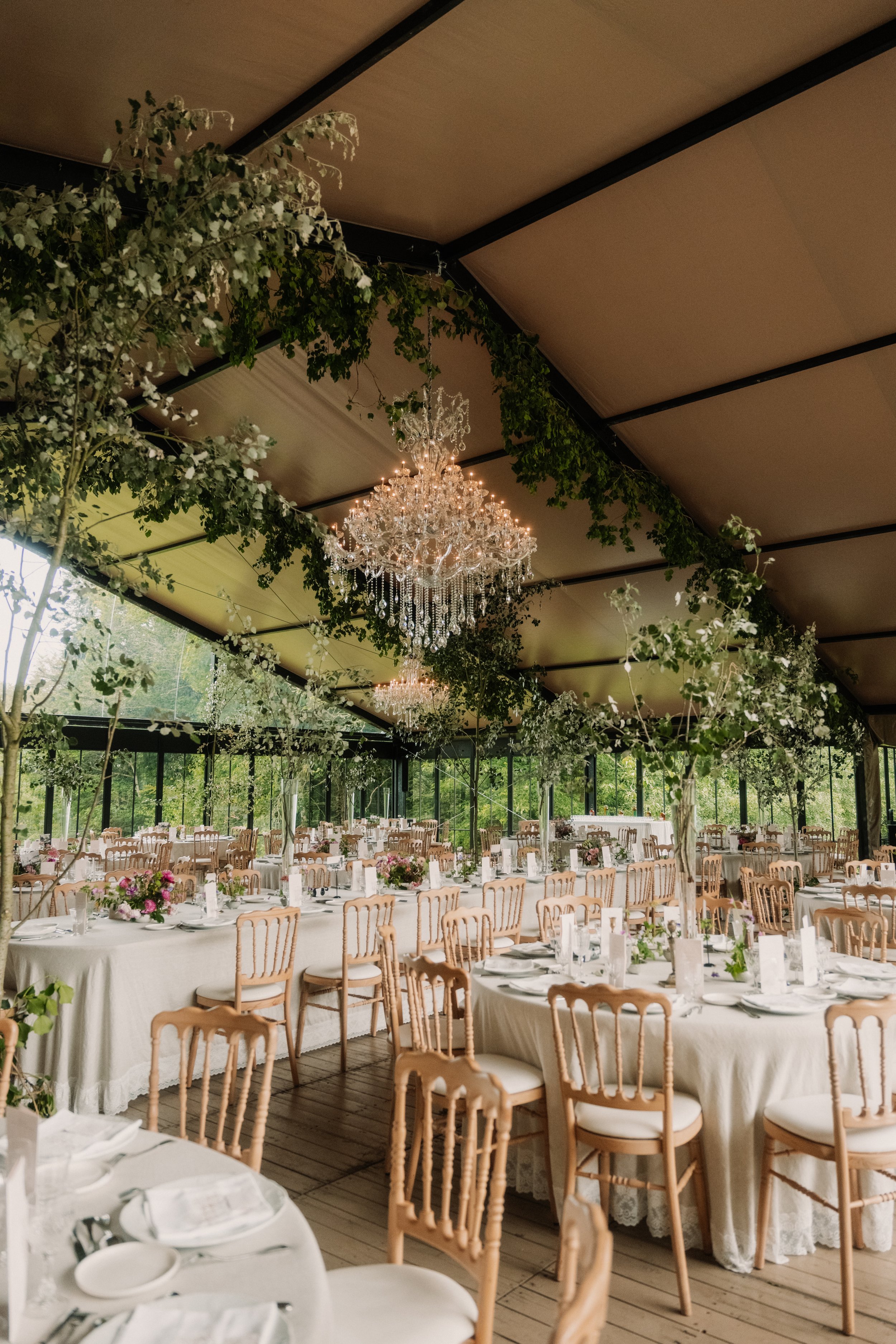
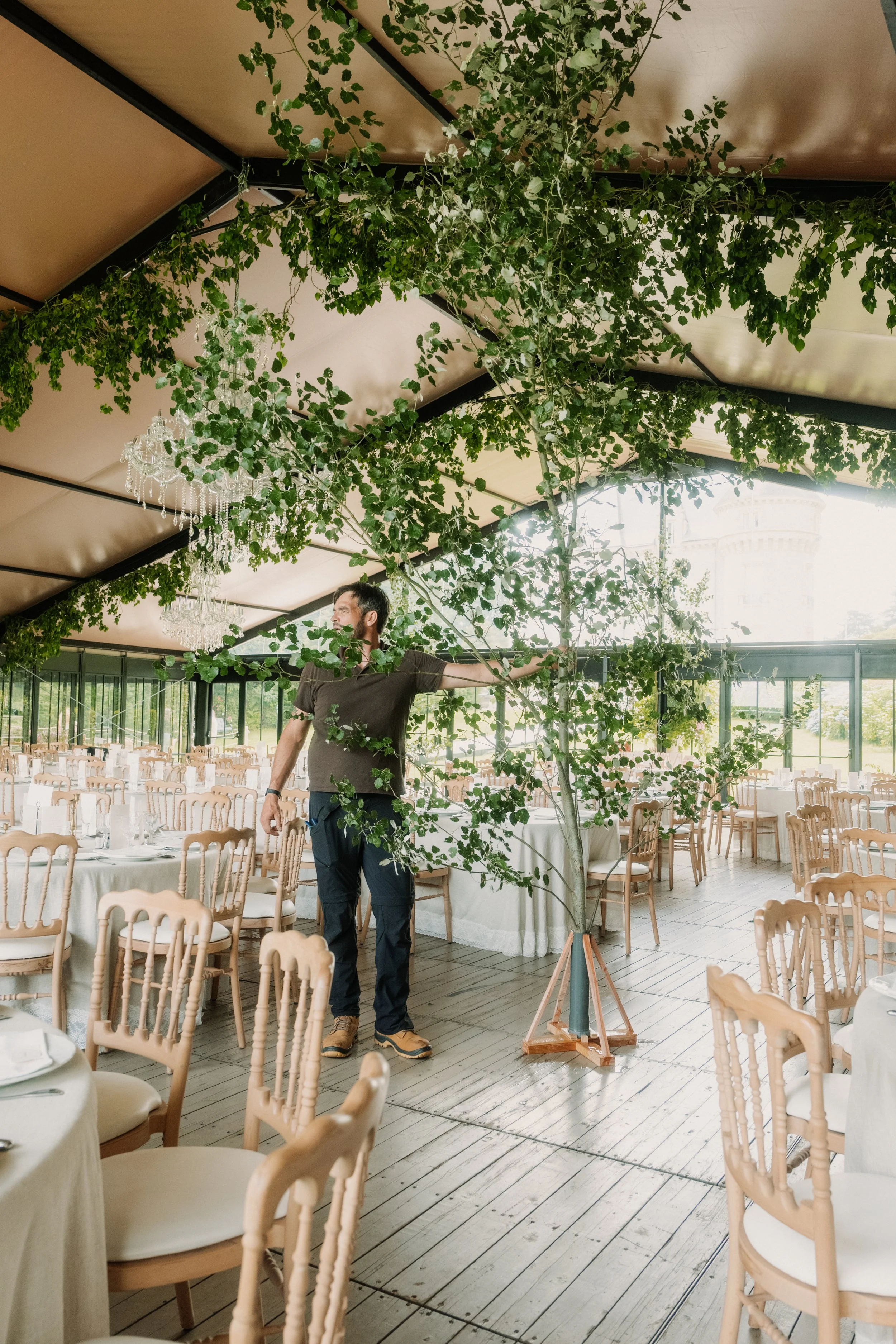
We started from ivy and foliage garlands. The inspiration was to use greenery at the top of the structure, so the tent would feel less like an added construction and more like a continuation of the garden.
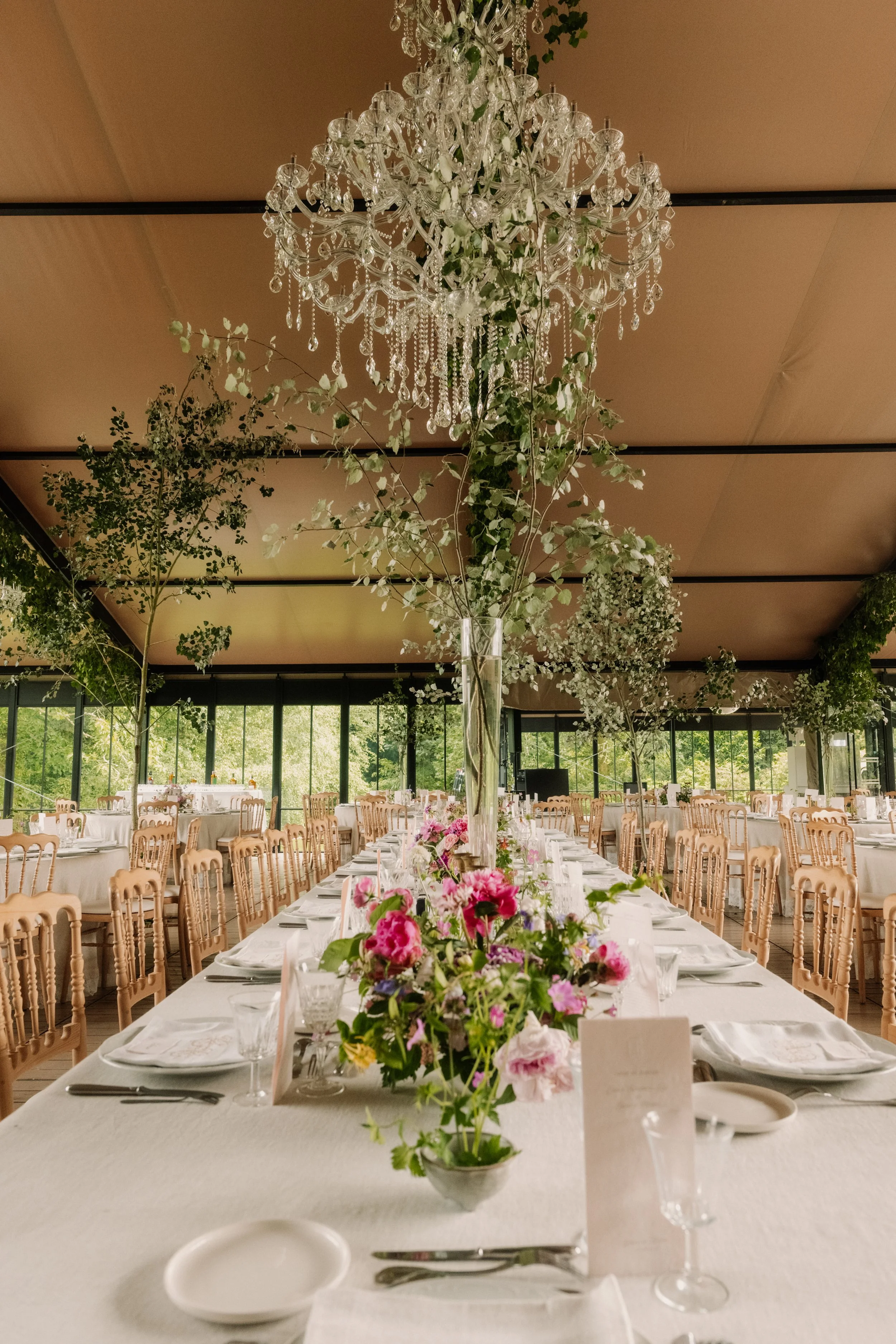
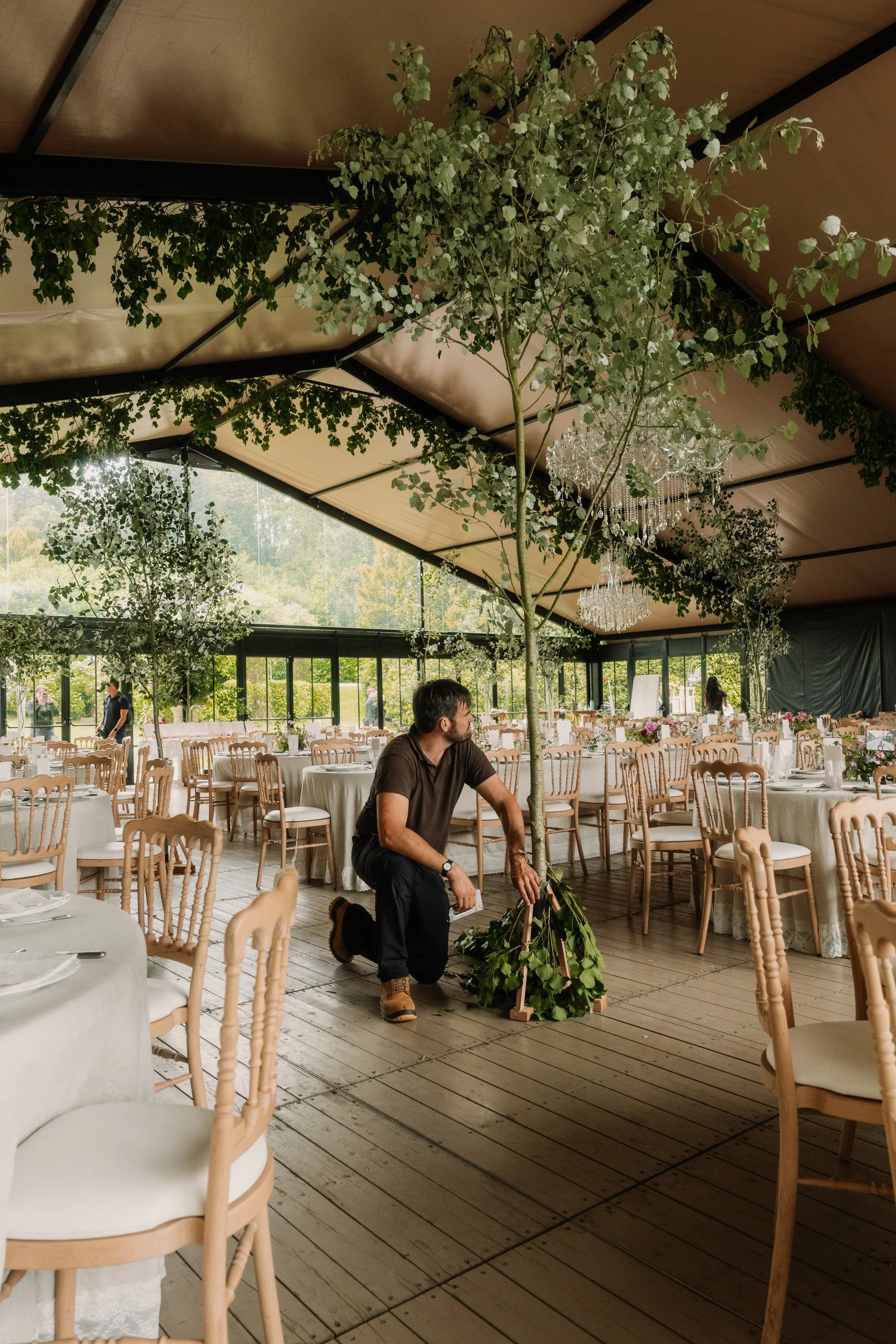
From there, the design grew naturally: long lines of foliage, trees, branches in tall glass vases, large urns outside, lighter seasonal flowers on the tables, and deeper fuchsia touches to bring more colour and depth.
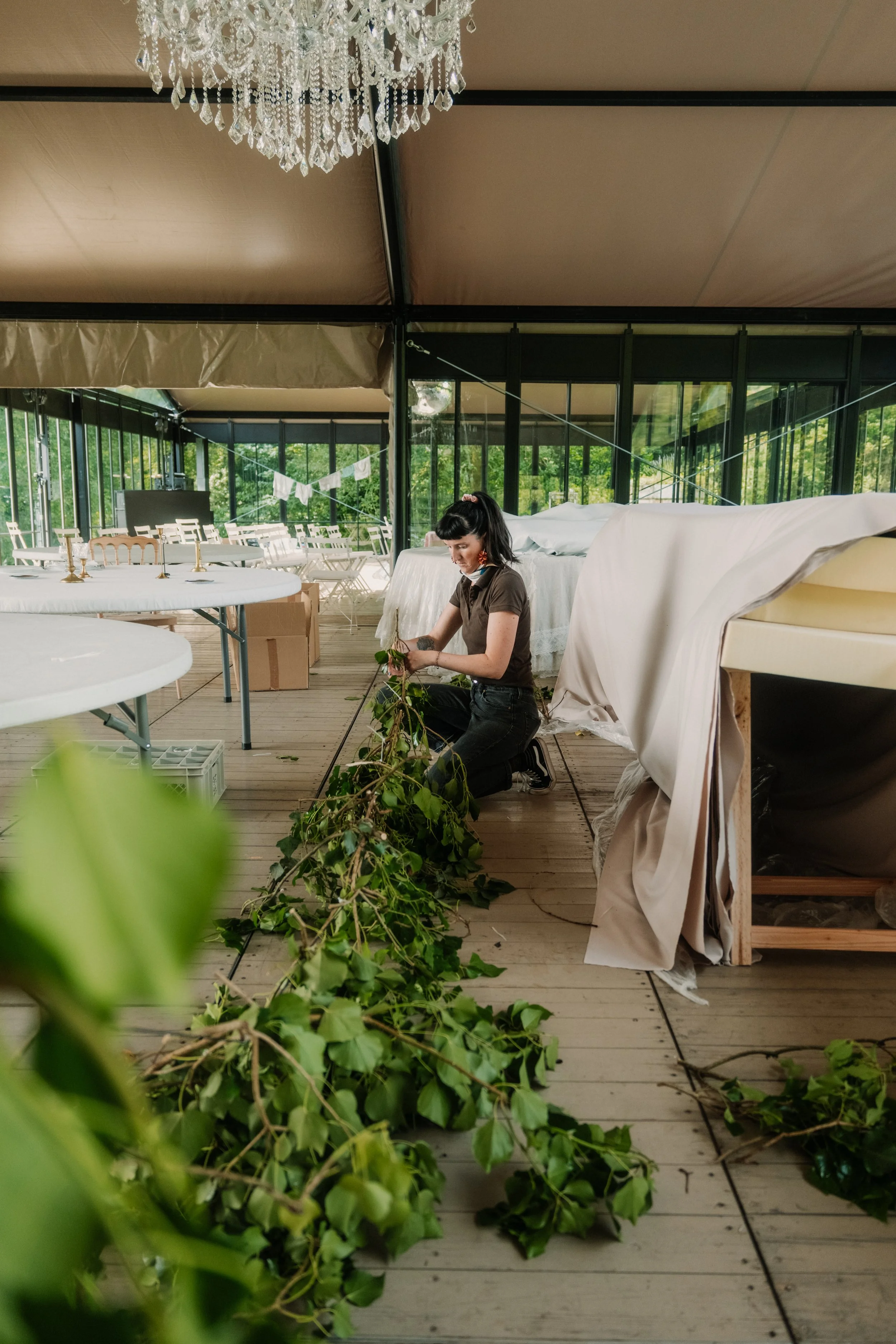
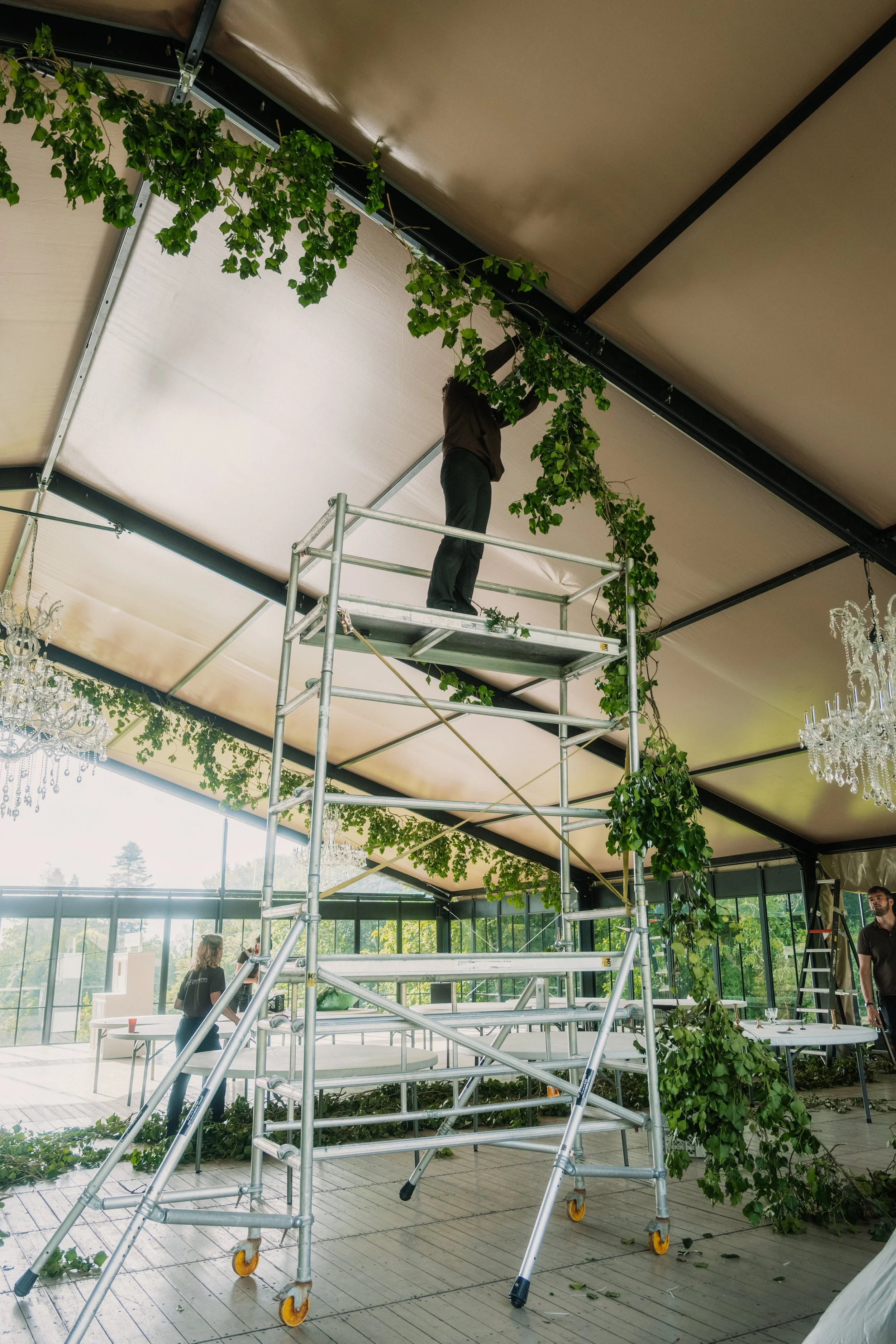
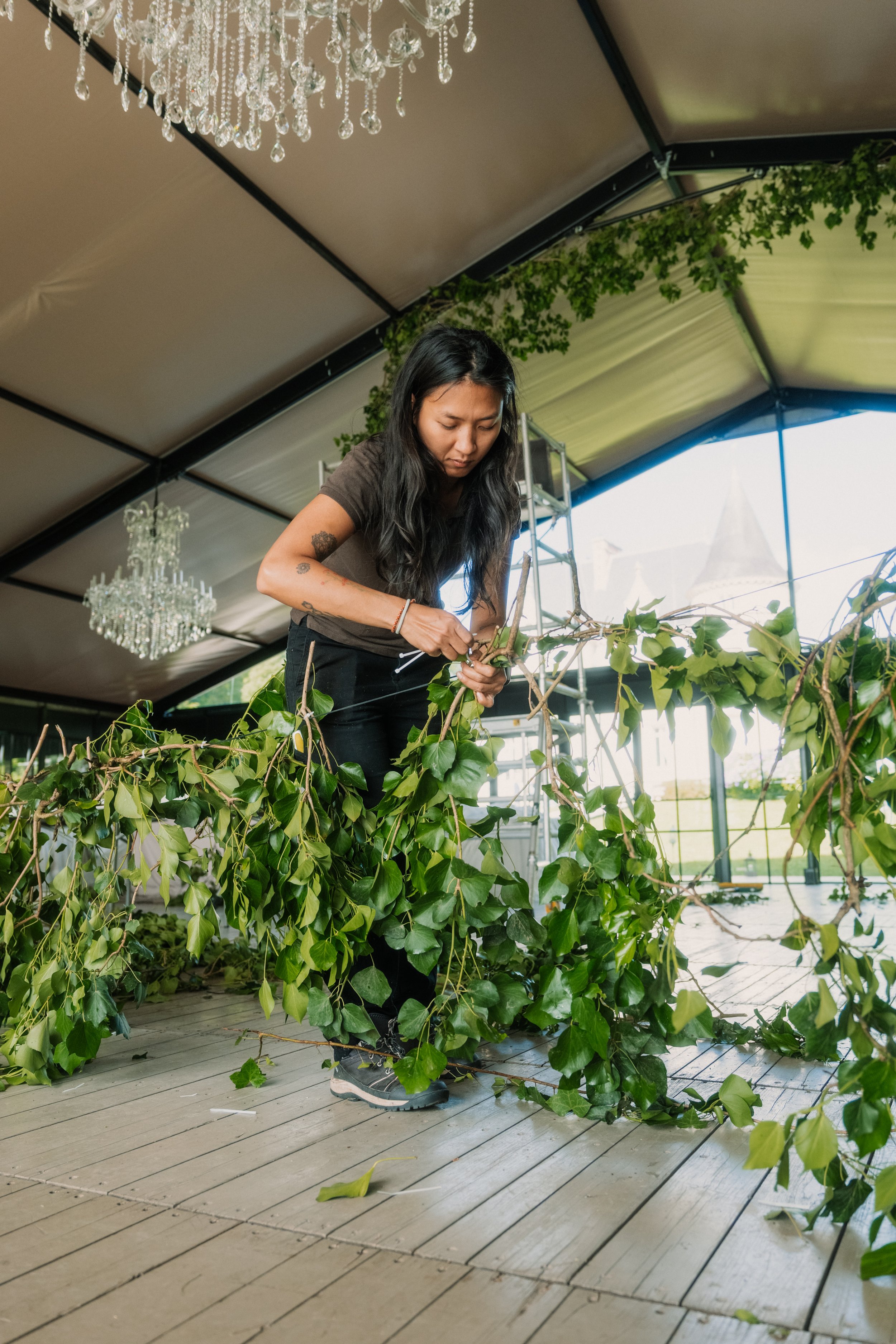
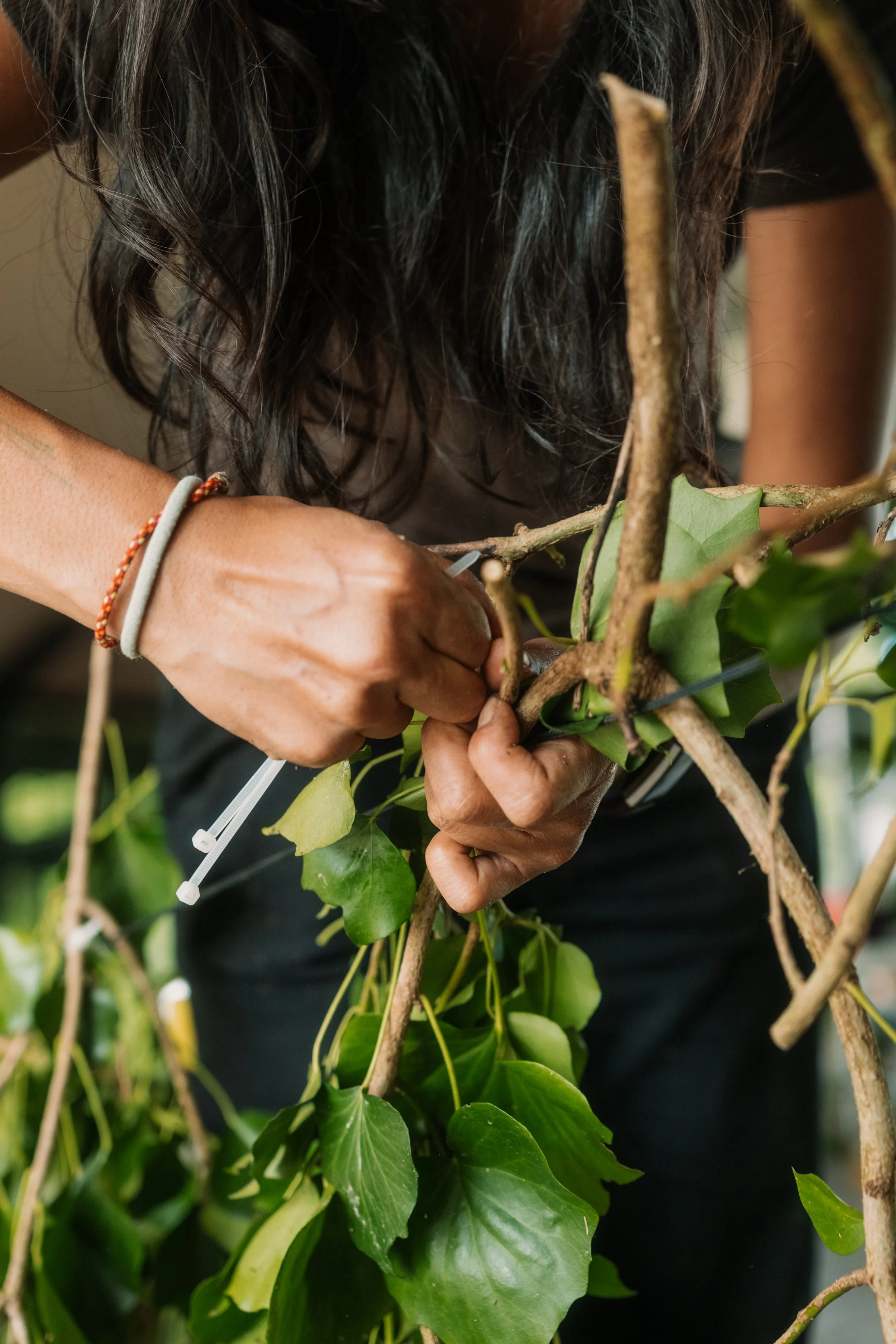
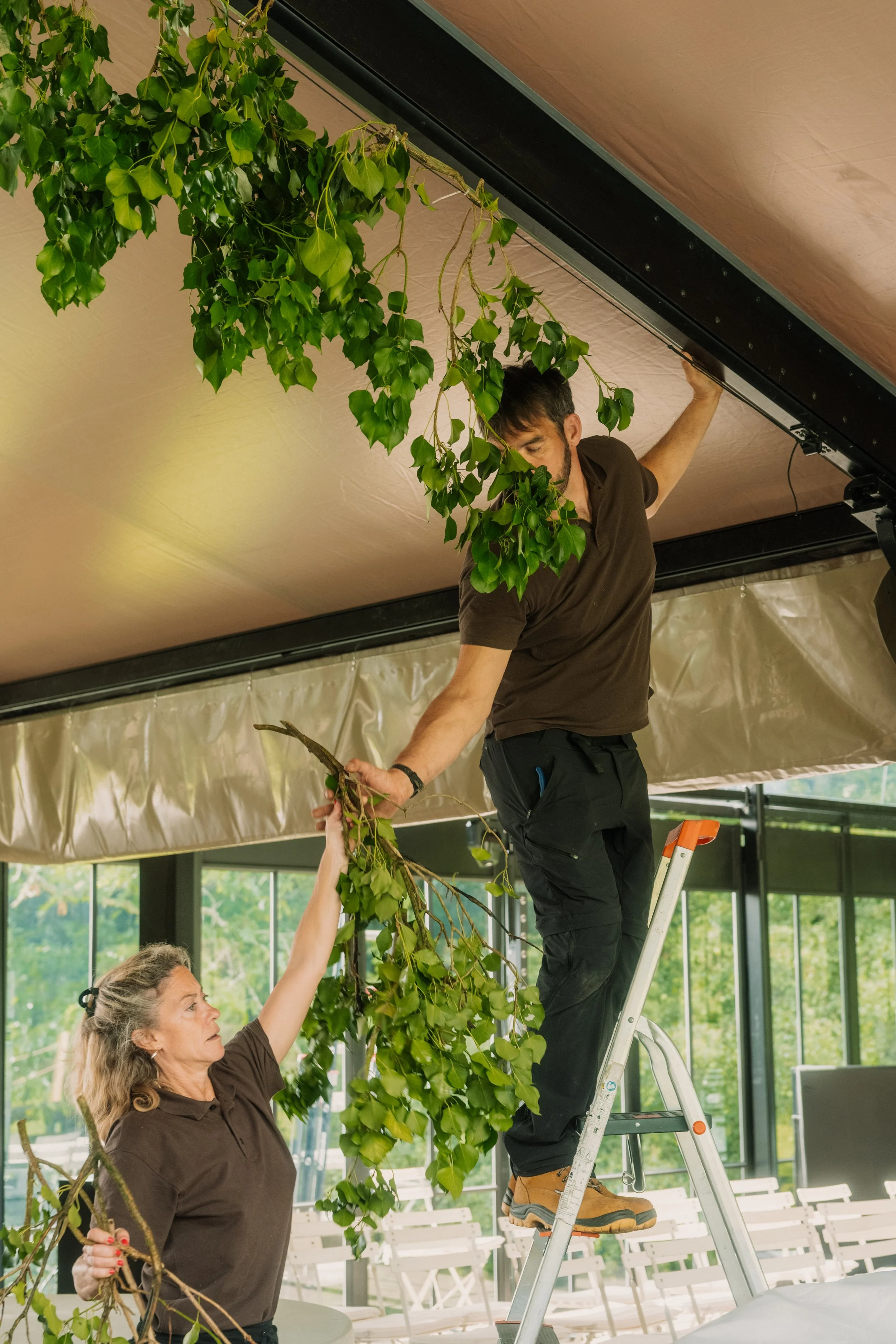
The part that happens before the room is ready
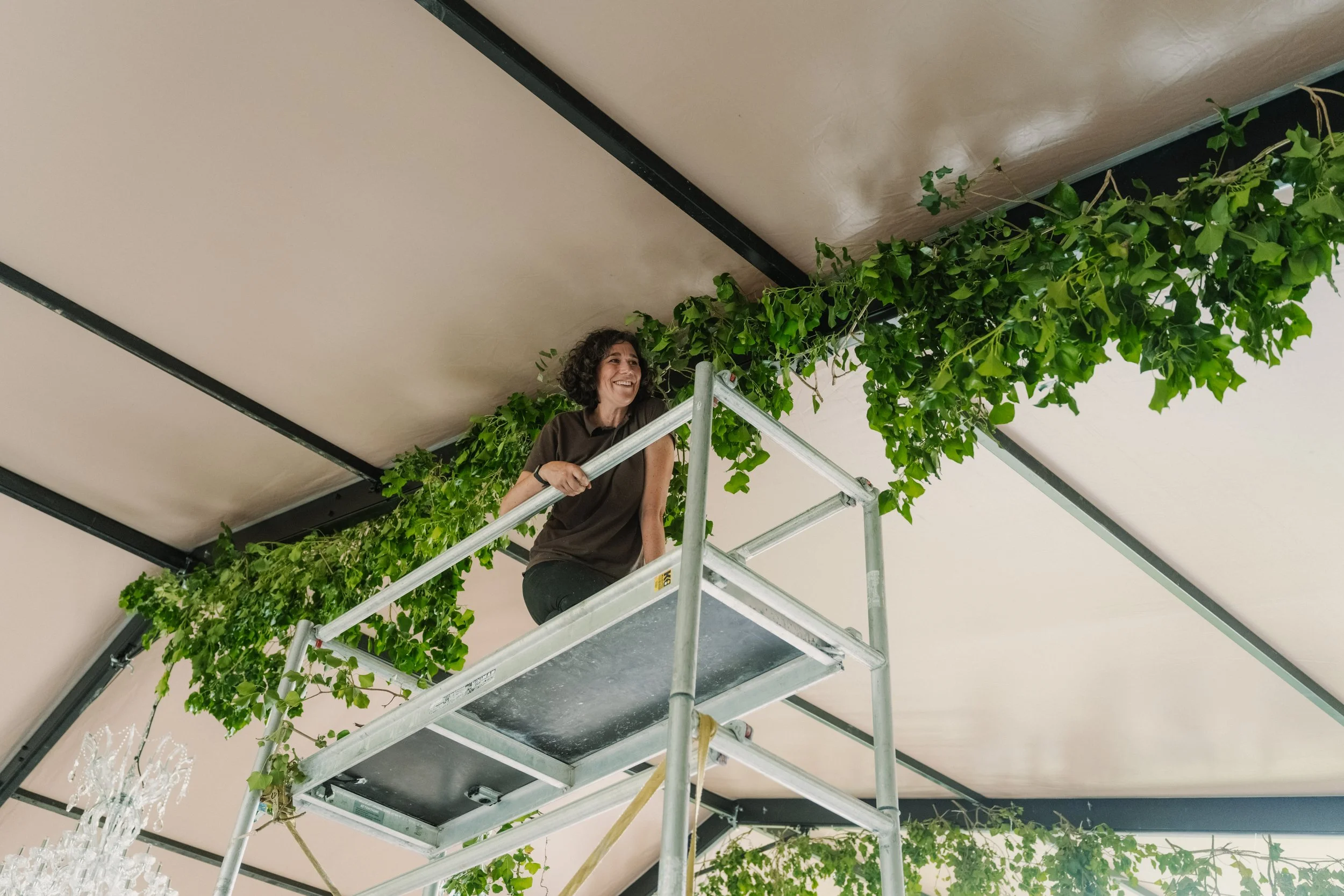
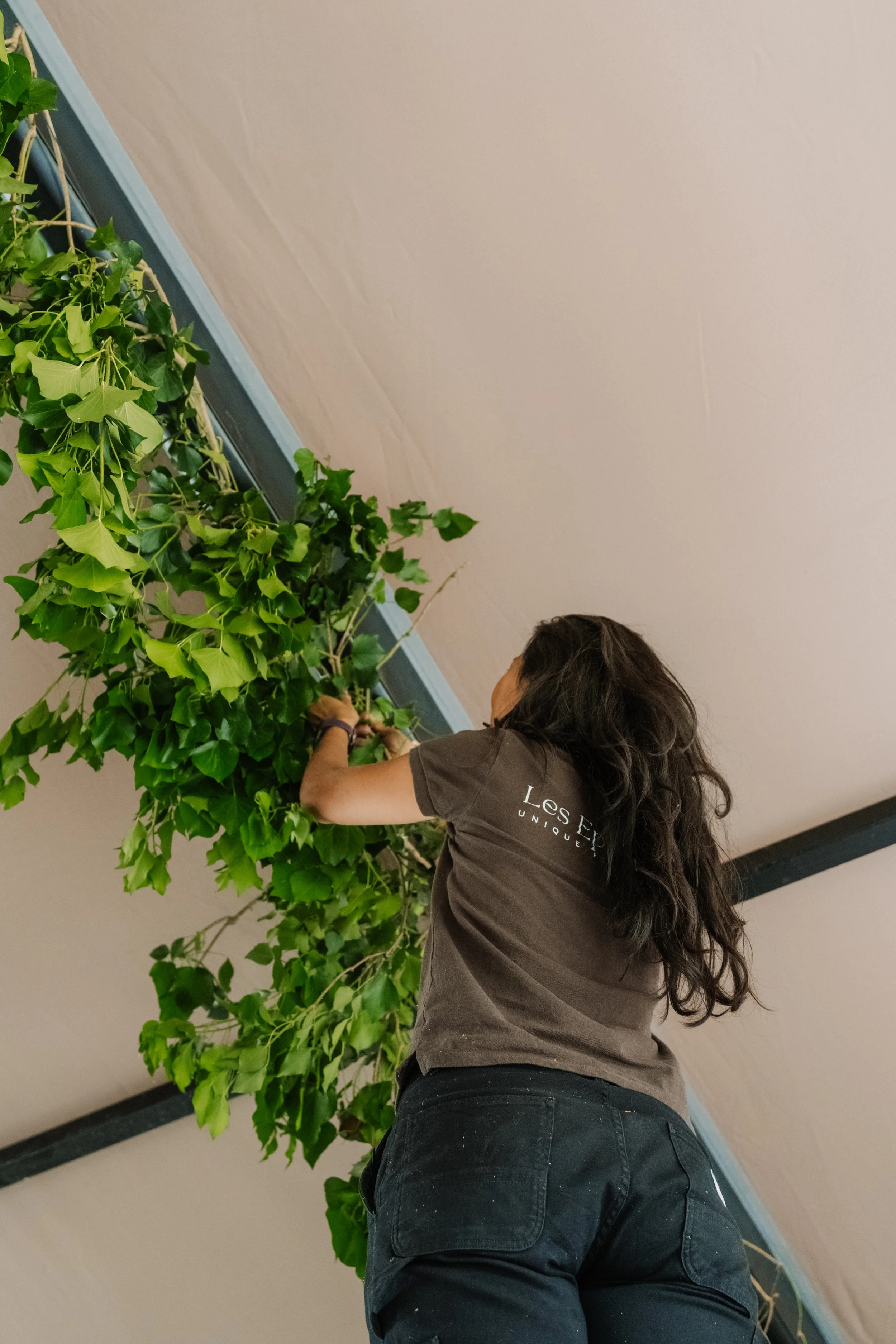
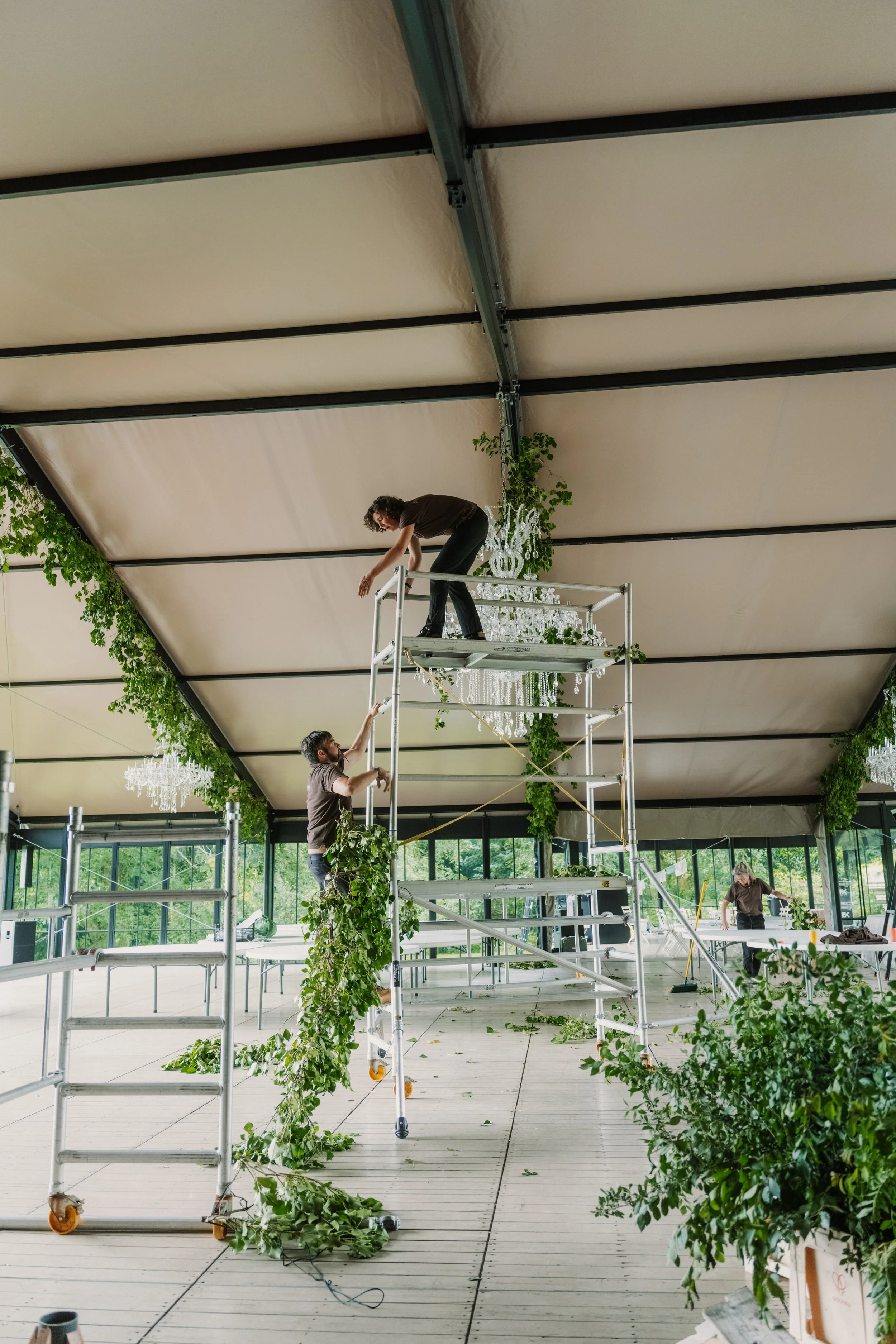
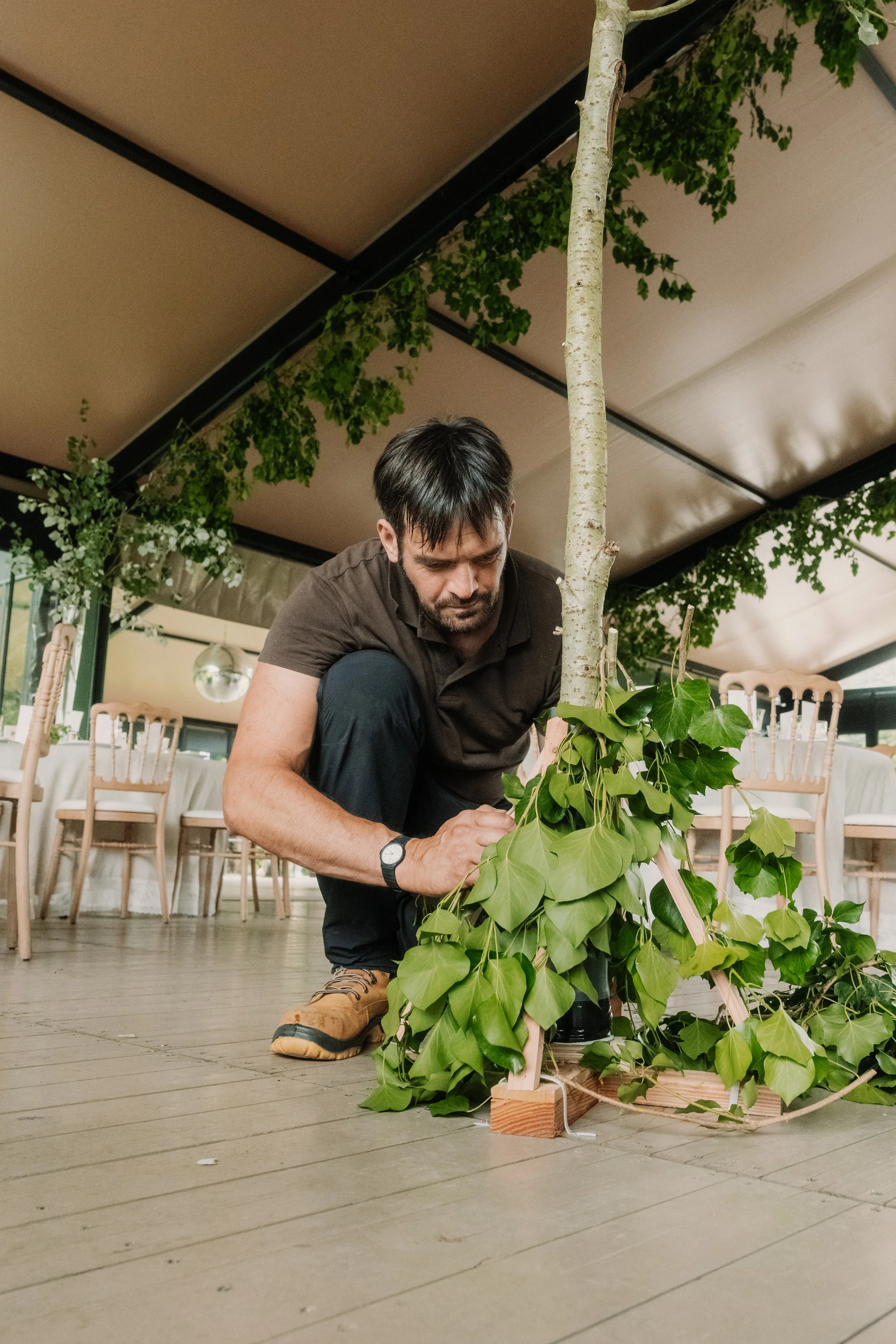
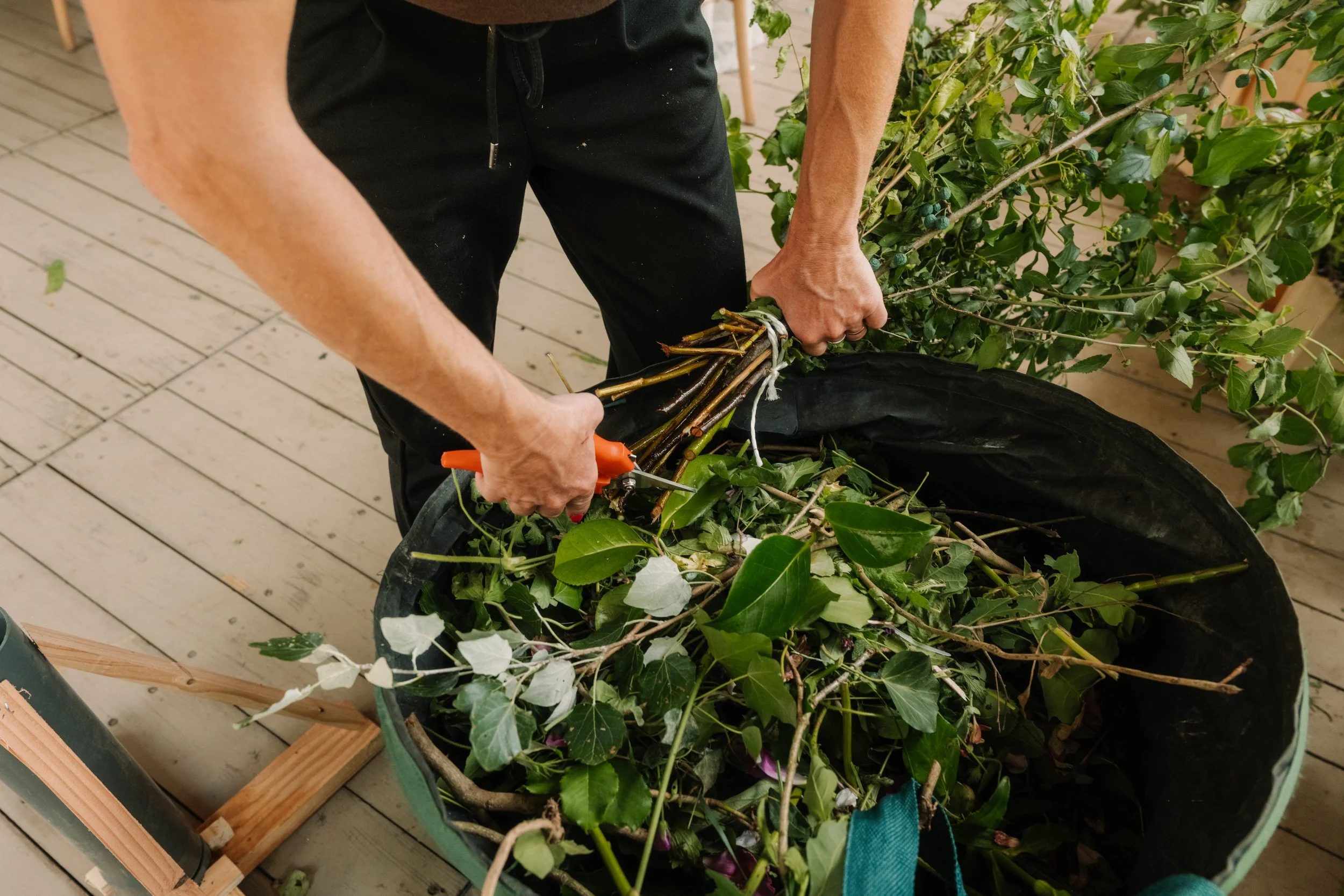
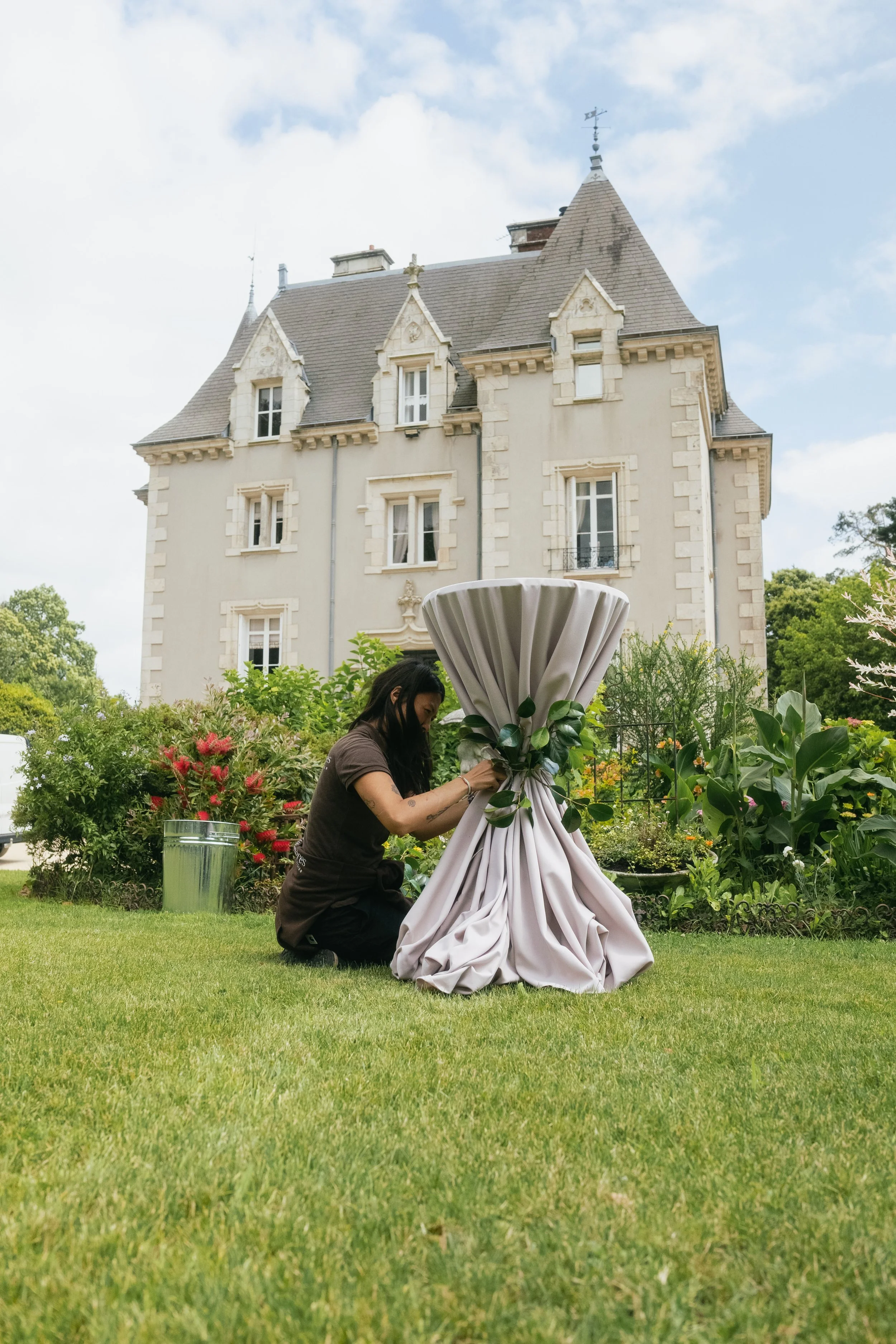
The preparation for this kind of wedding floral design is very physical.
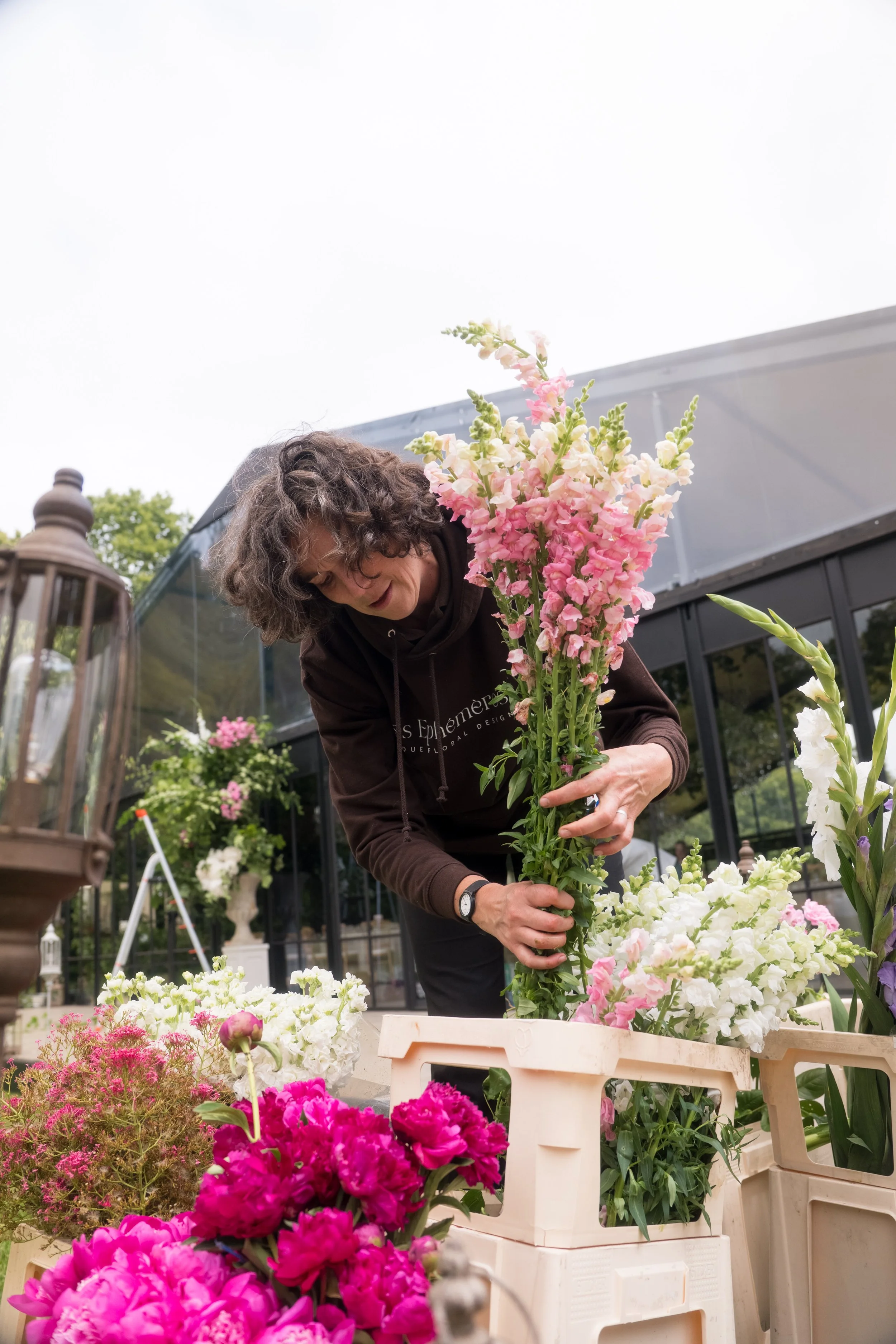
There are branches on the floor, buckets everywhere, flowers waiting in water, foliage to keep fresh, ladders, scaffolding, tools, wet stems, crates, and many small decisions made directly on site.
For this wedding, we created around 60 metres of foliage garlands. Part of the work happened several metres high, on scaffolding, inside the glass tent. The greenery had to follow the structure without looking too heavy. It had to hold properly, stay fresh, and still keep movement.
That balance is important to me. I like flowers and foliage to feel alive, especially in a space that already has so much architecture.
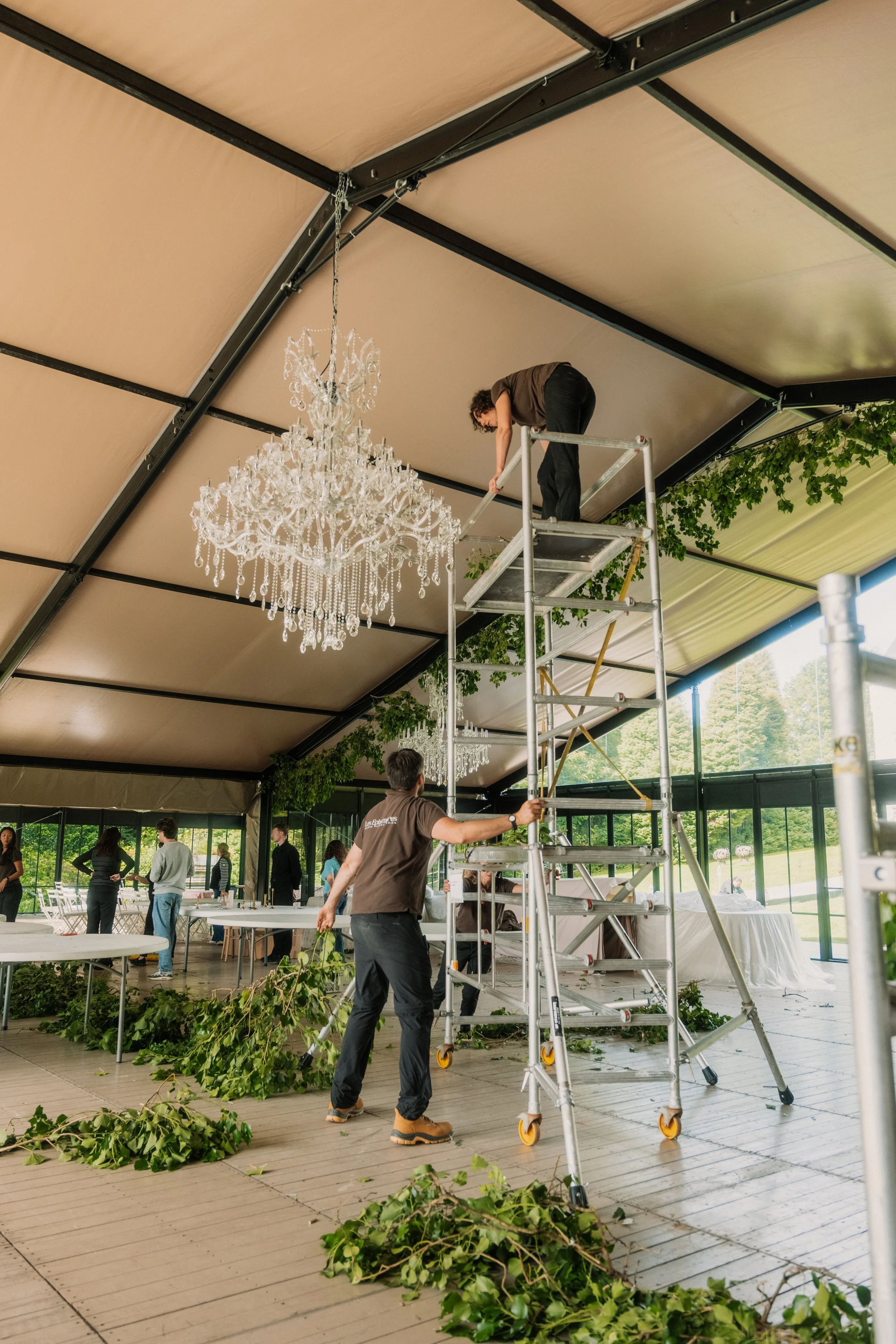
Working with flowers under a glass tent
A glass tent is beautiful, but it also asks for attention.
The light is strong. The temperature can change quickly. Fresh flowers and foliage can suffer if everything is installed too early or kept in the wrong conditions.
We were lucky with the weather. It was mild, even quite fresh, which helped a lot. After receiving the foliage, we kept it humidified so it stayed hydrated until the morning installation. Under a tent, that part matters. You can have the right design, the right flowers, the right team, but if the materials are tired before the guests arrive, the whole feeling changes.
Here, the greenery stayed fresh and full. That allowed the final installation to keep the garden feeling we wanted.
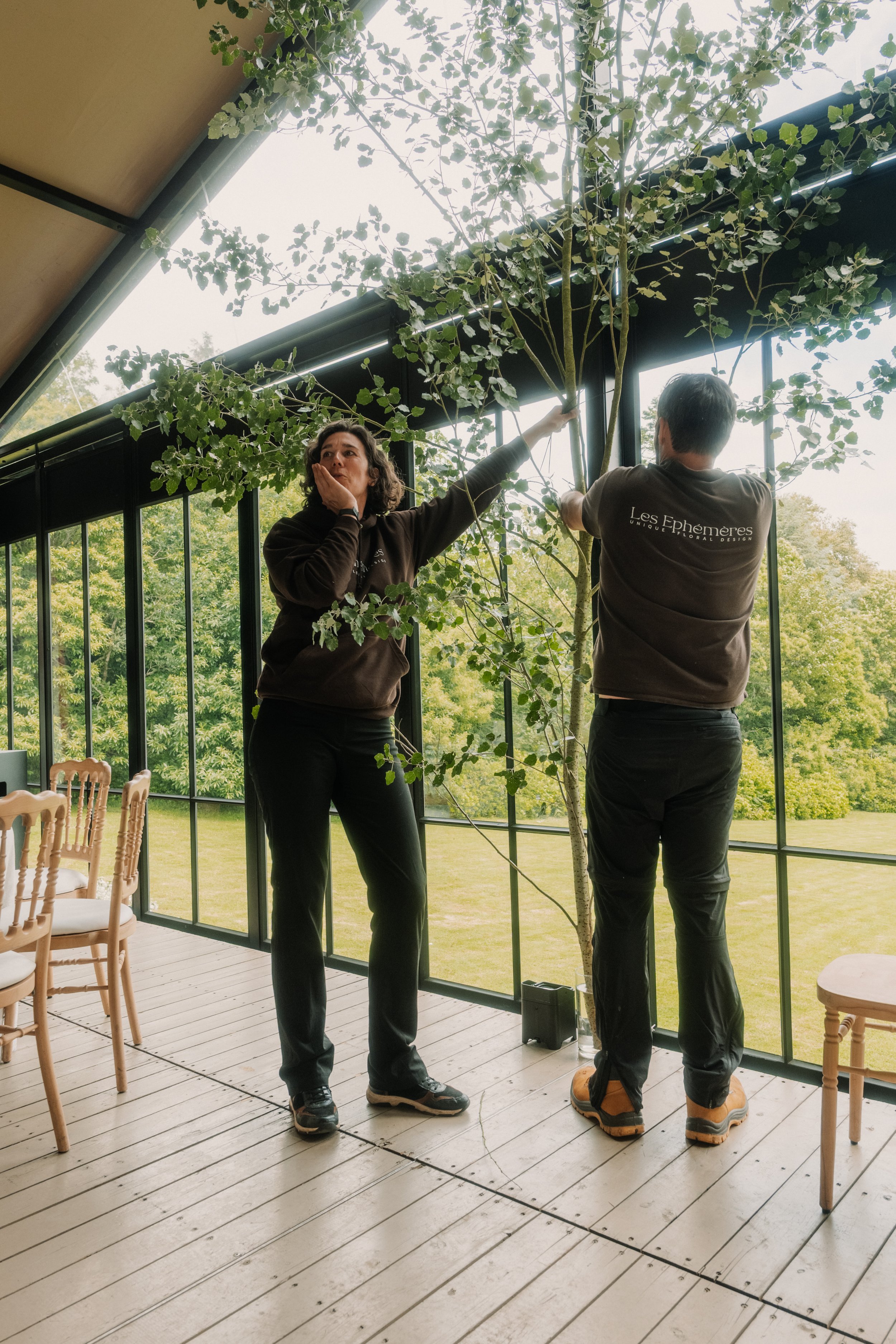
Flowers across the estate
The flowers were not concentrated in one place.
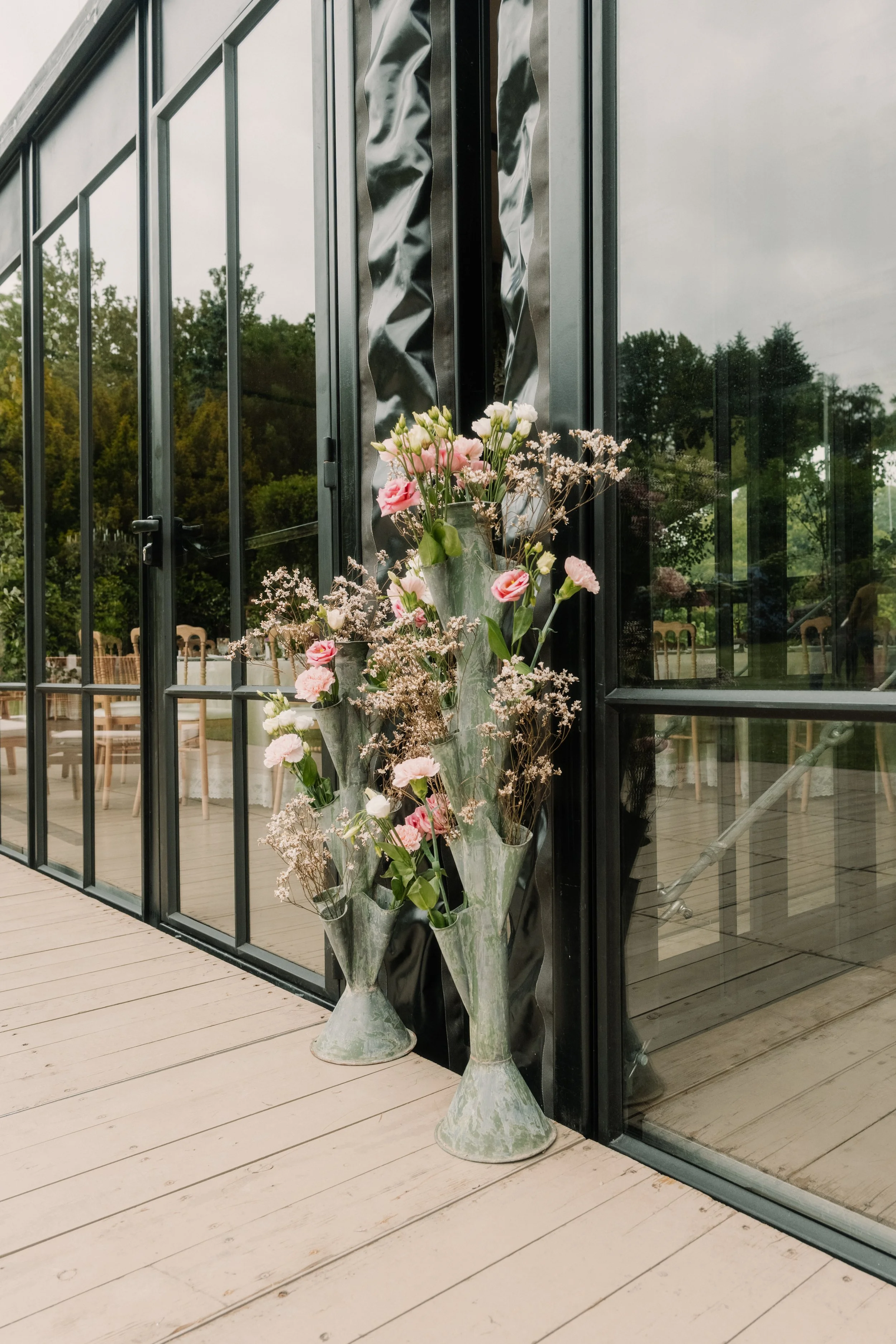
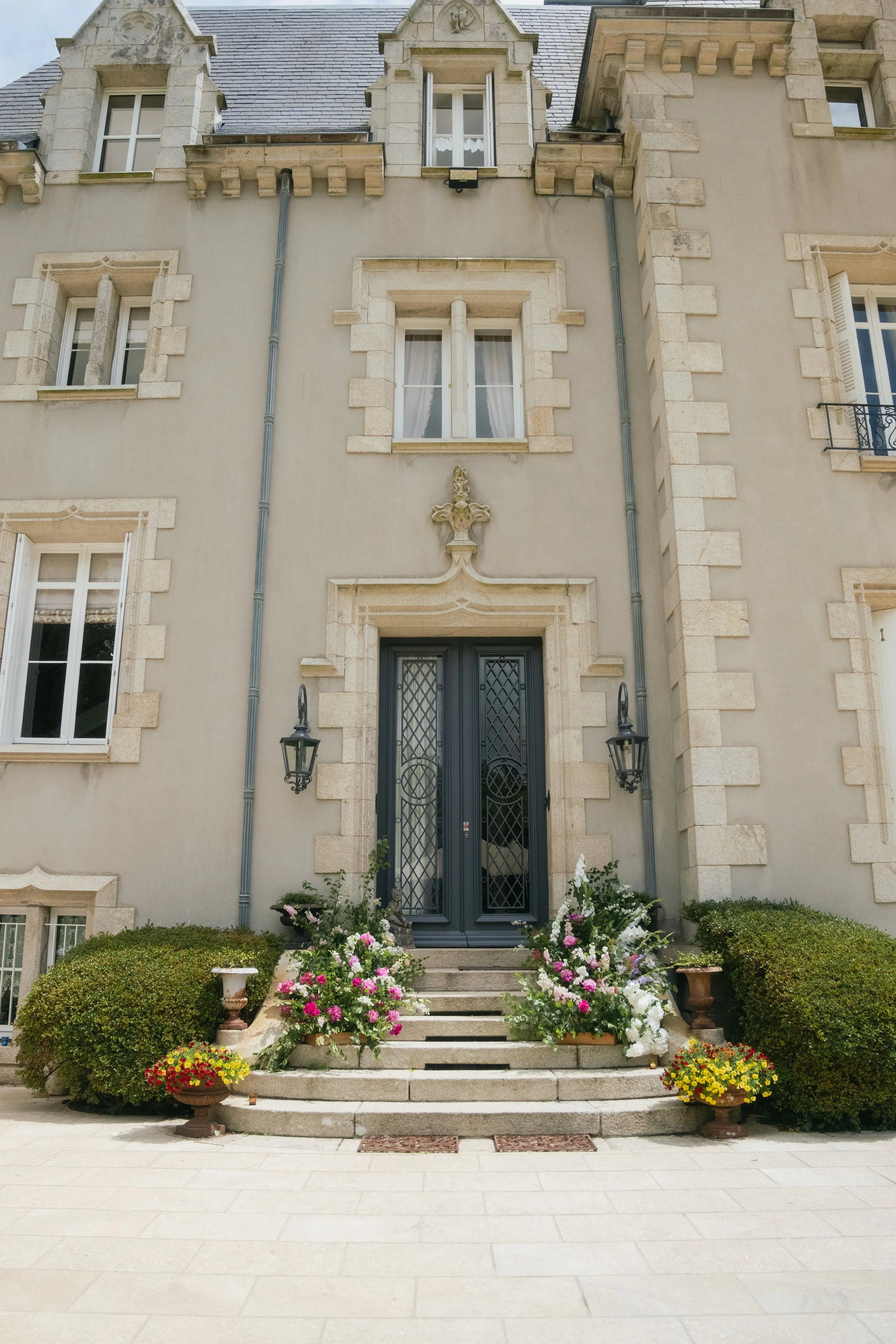
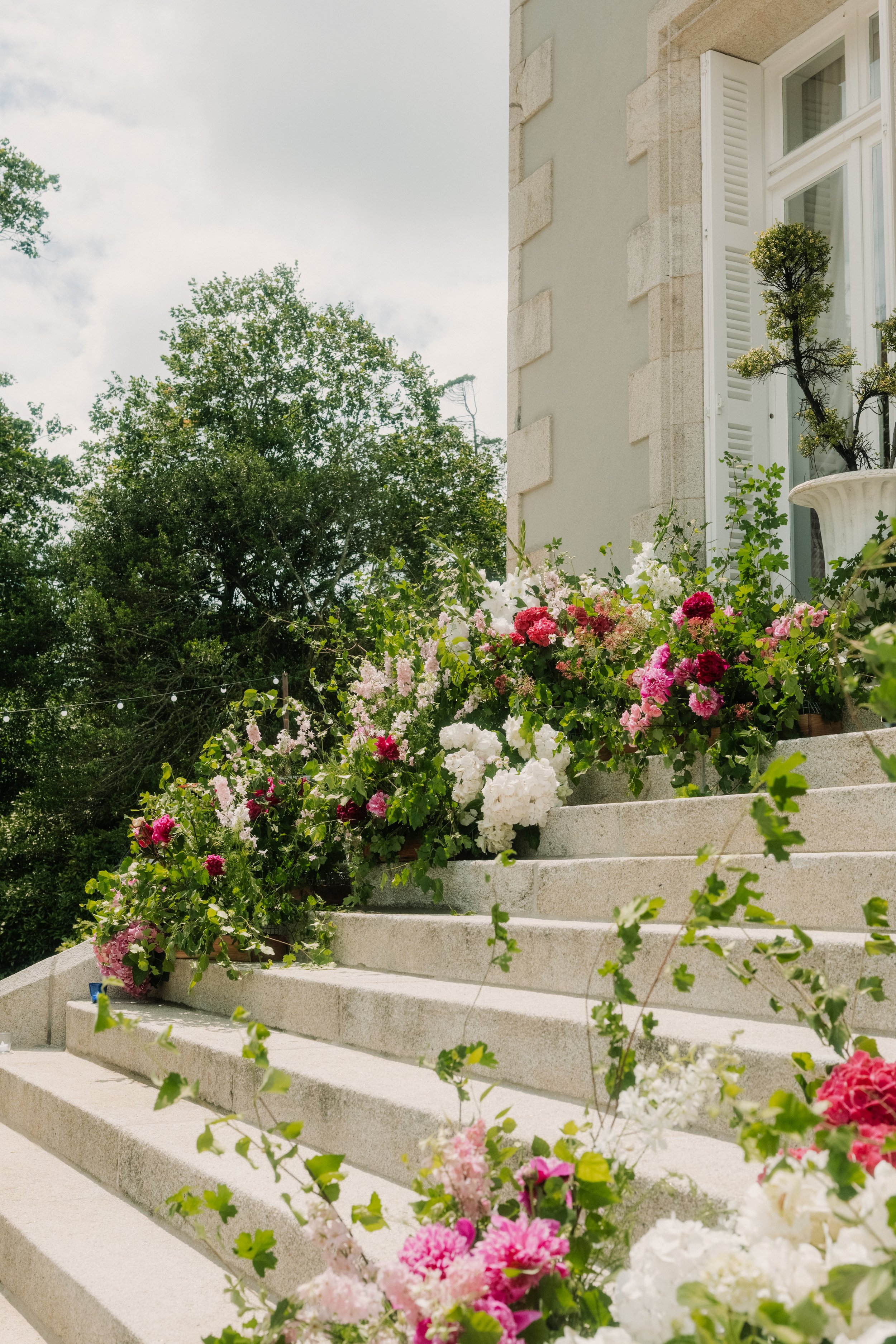
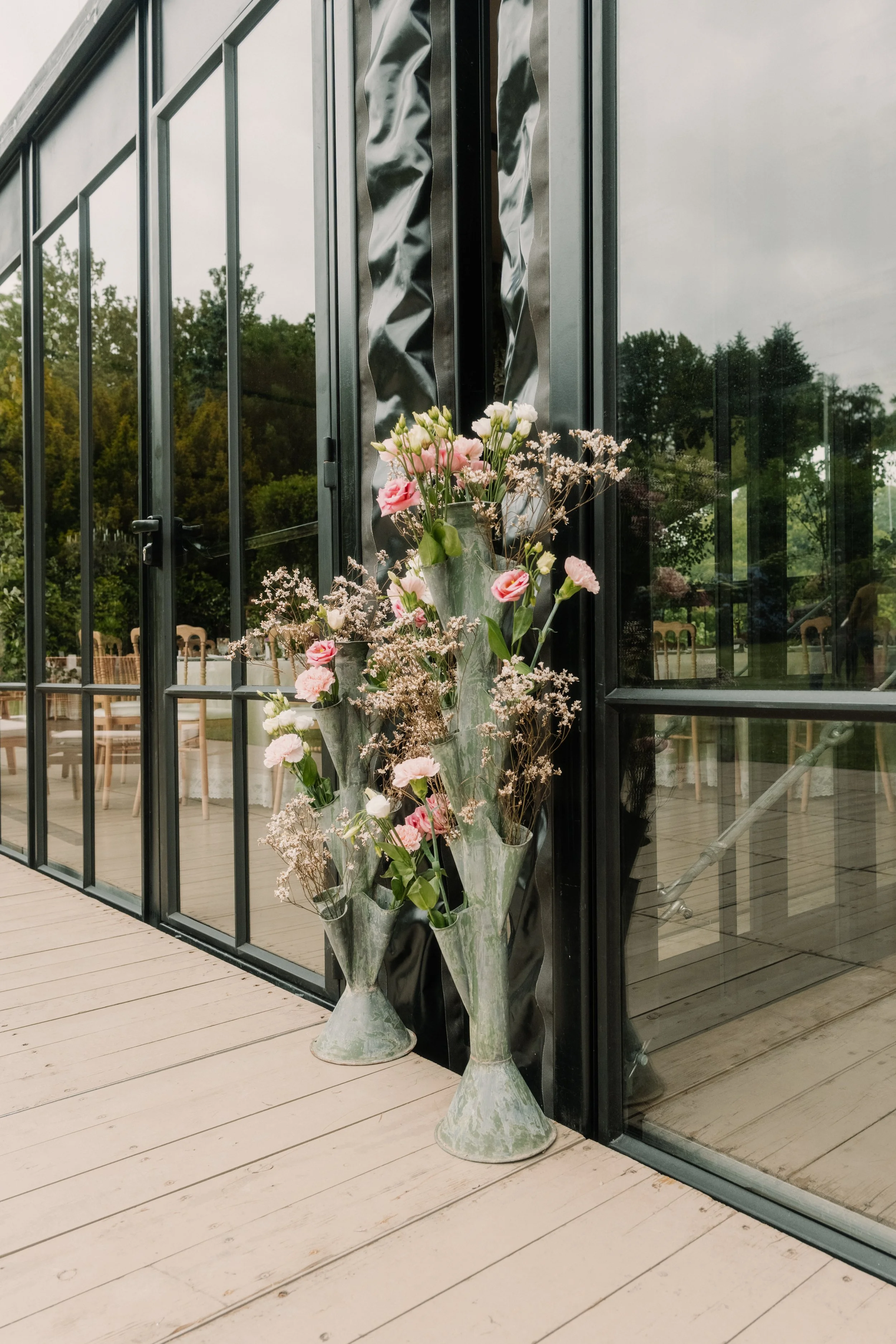
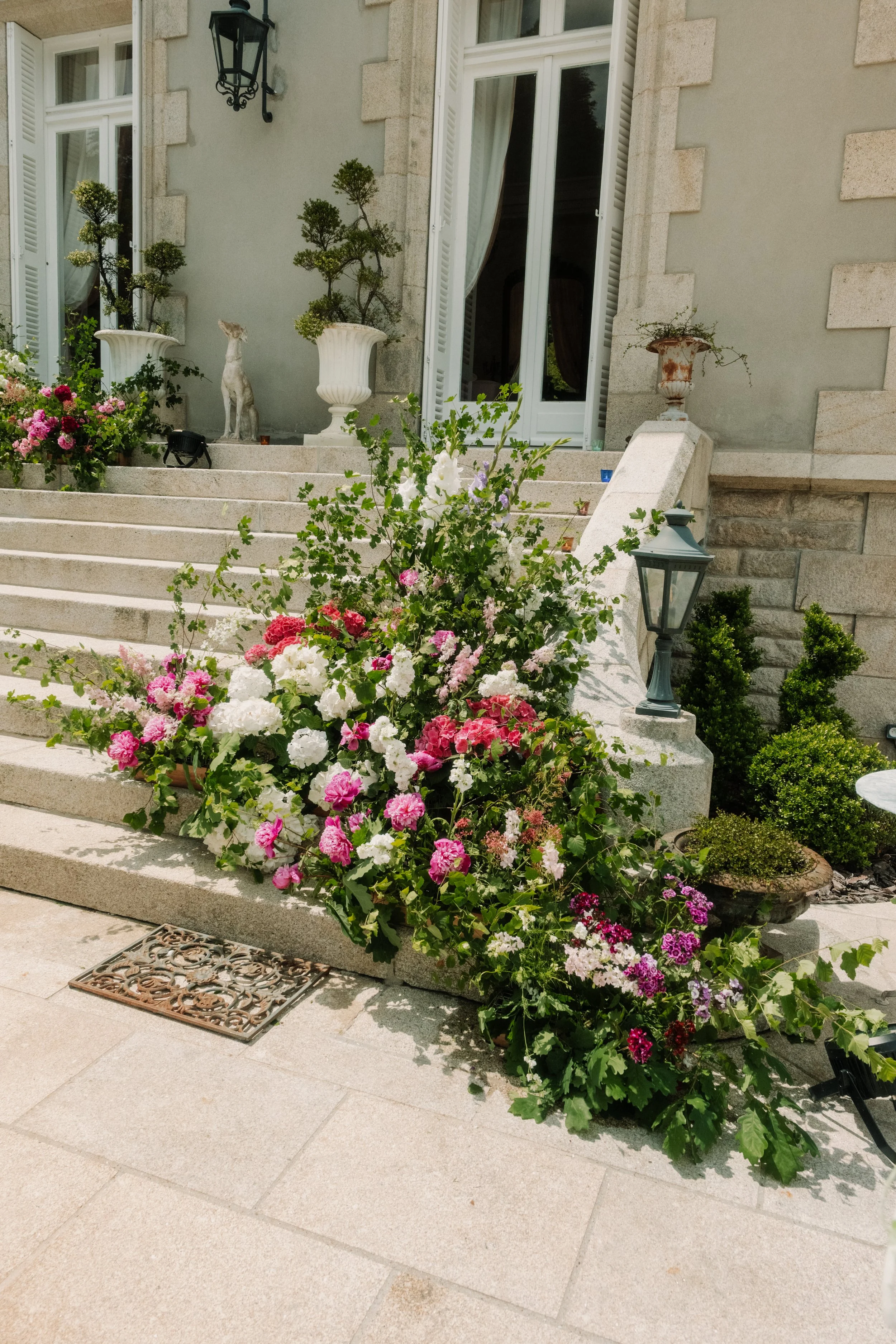
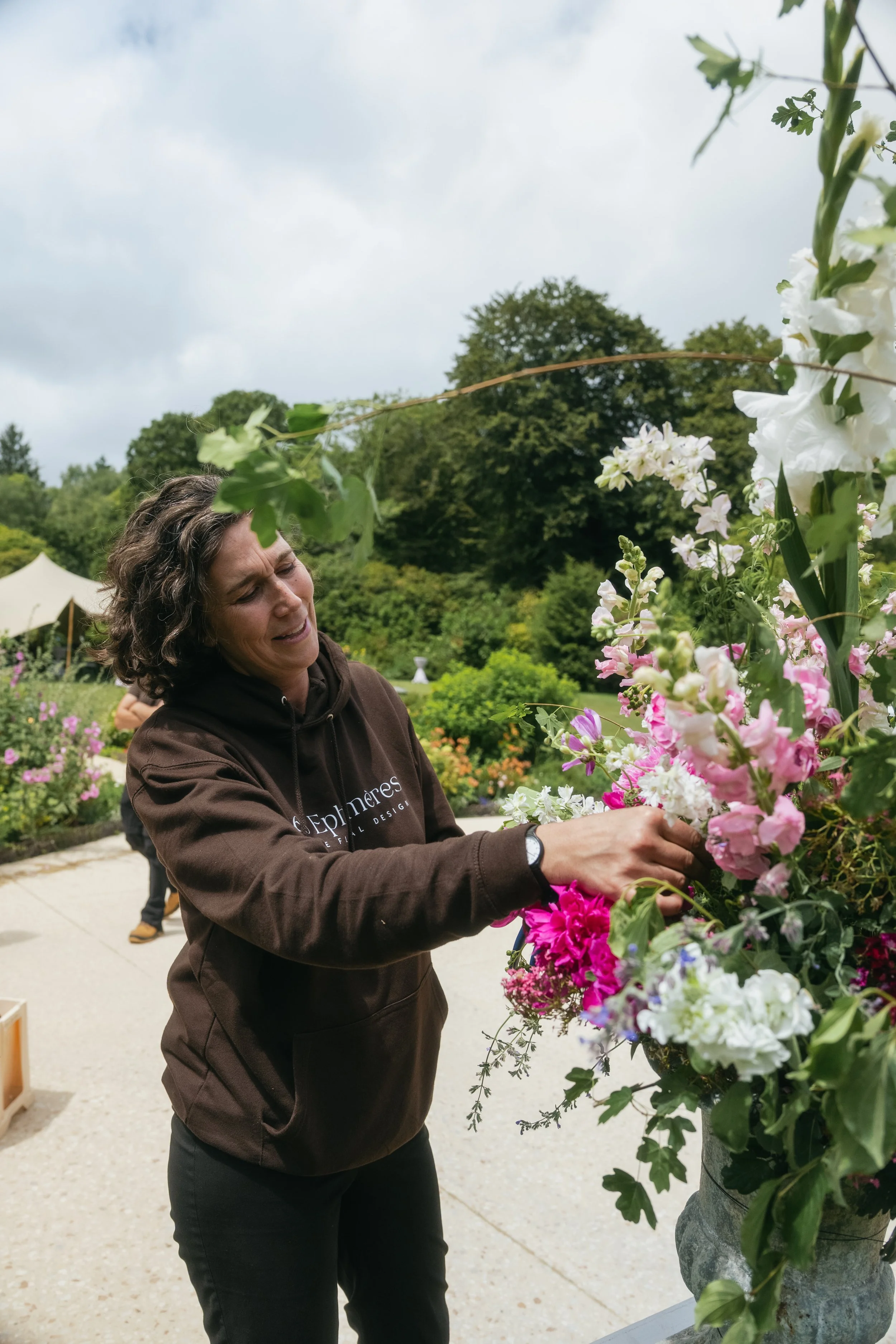
Outside, the entrance and the steps needed more volume. There were large urns, foliage, peonies, snapdragons, wallflowers and seasonal flowers in bright, garden colours. One staircase was also designed for a speech moment, so it needed to feel generous without blocking the space.
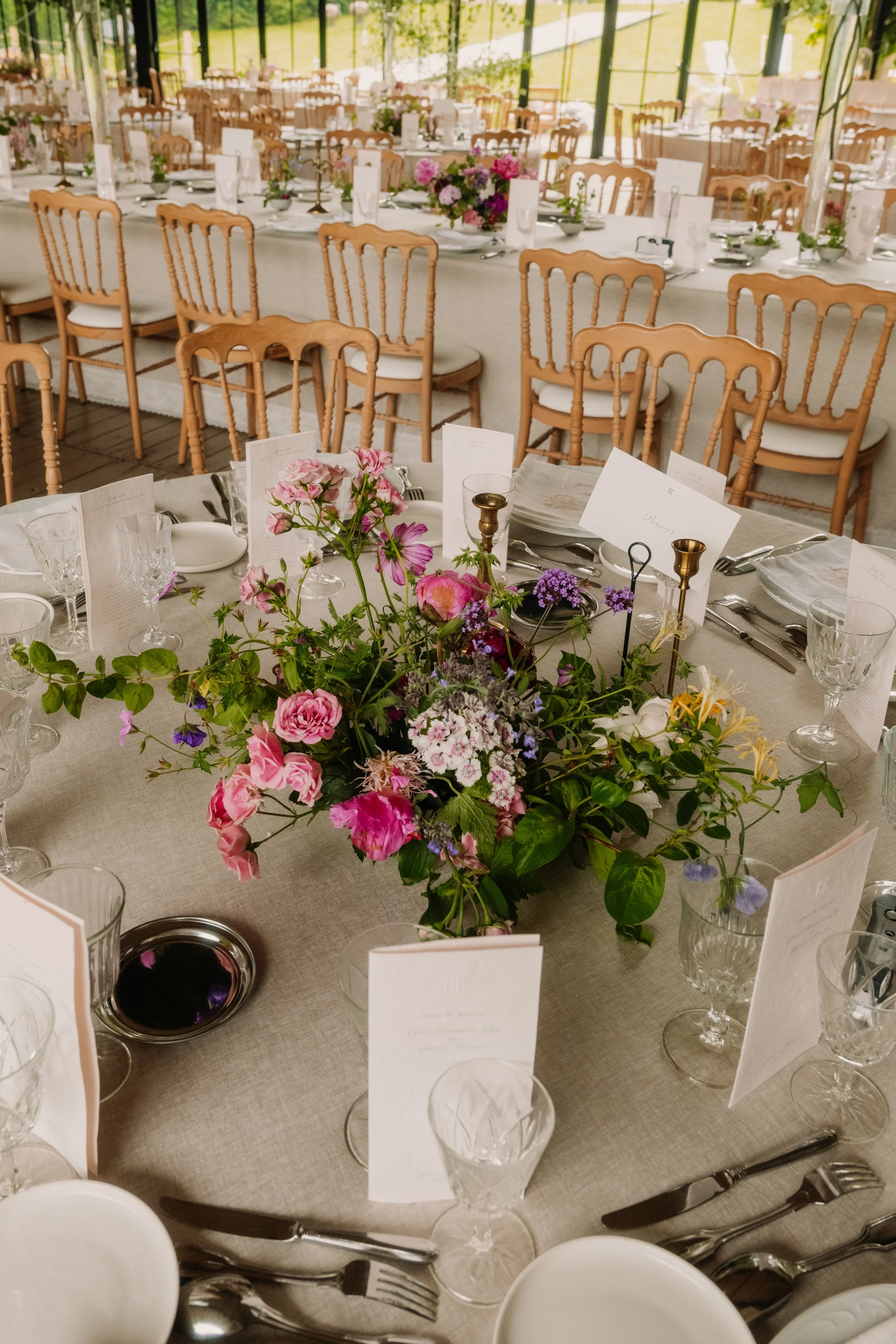
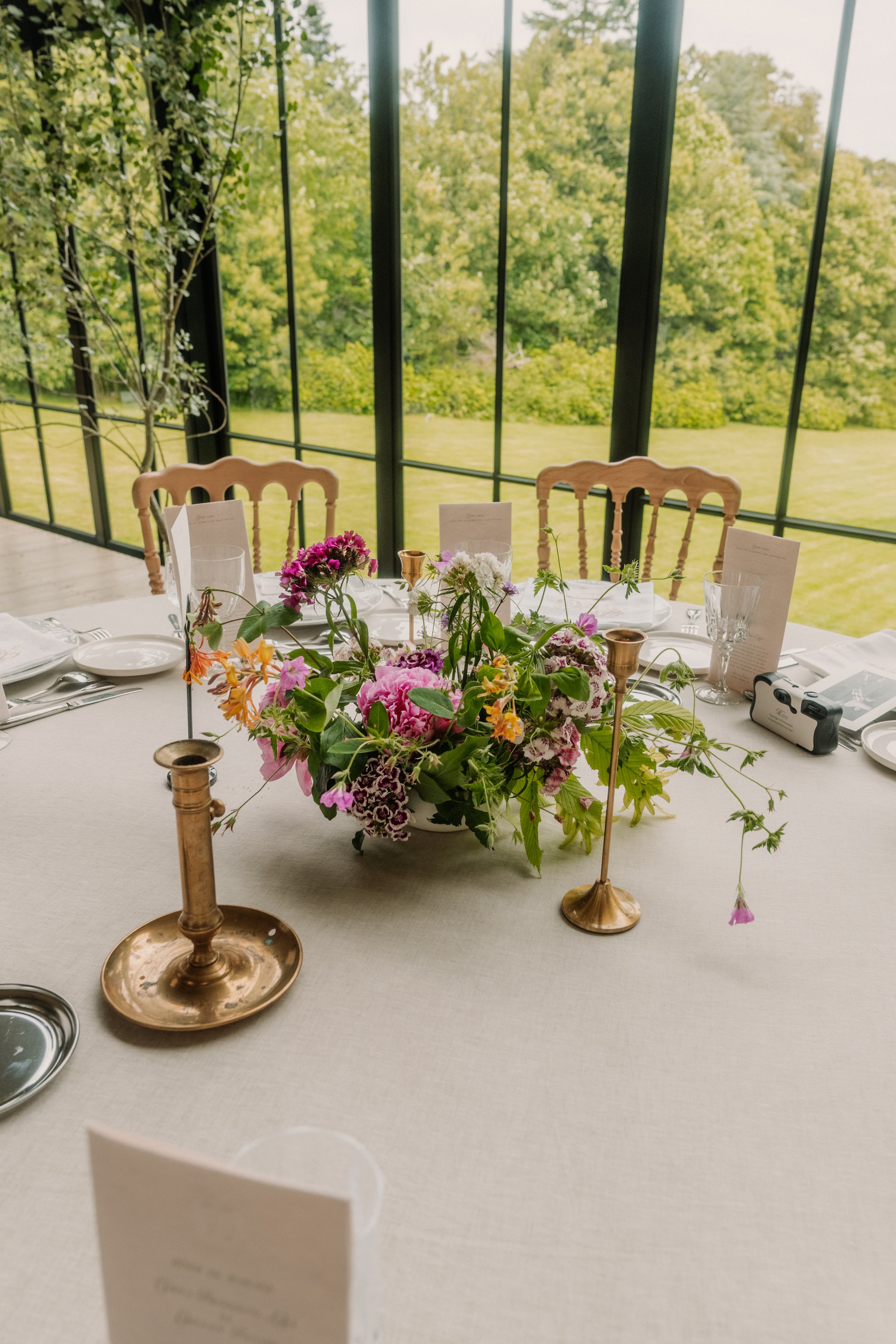
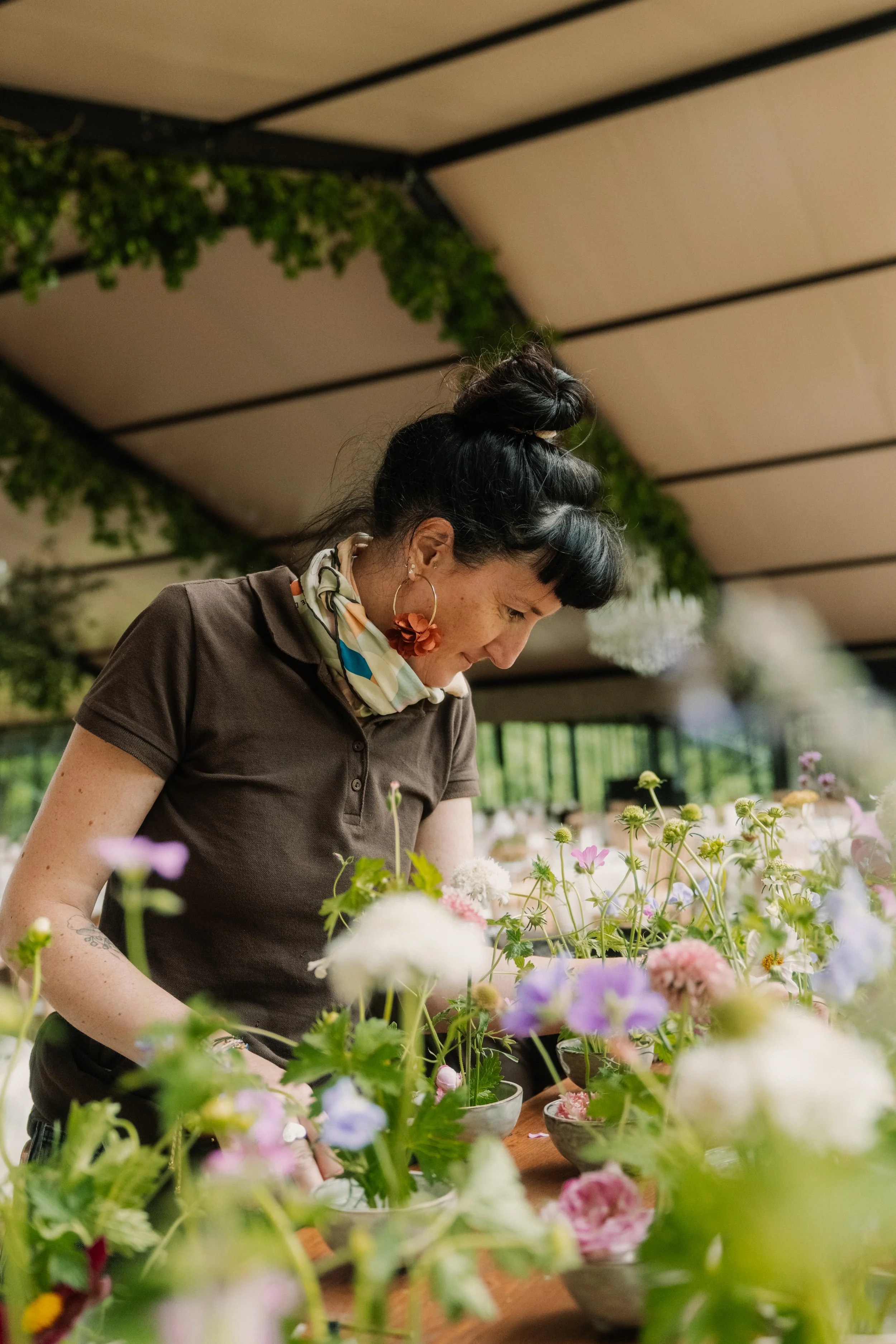
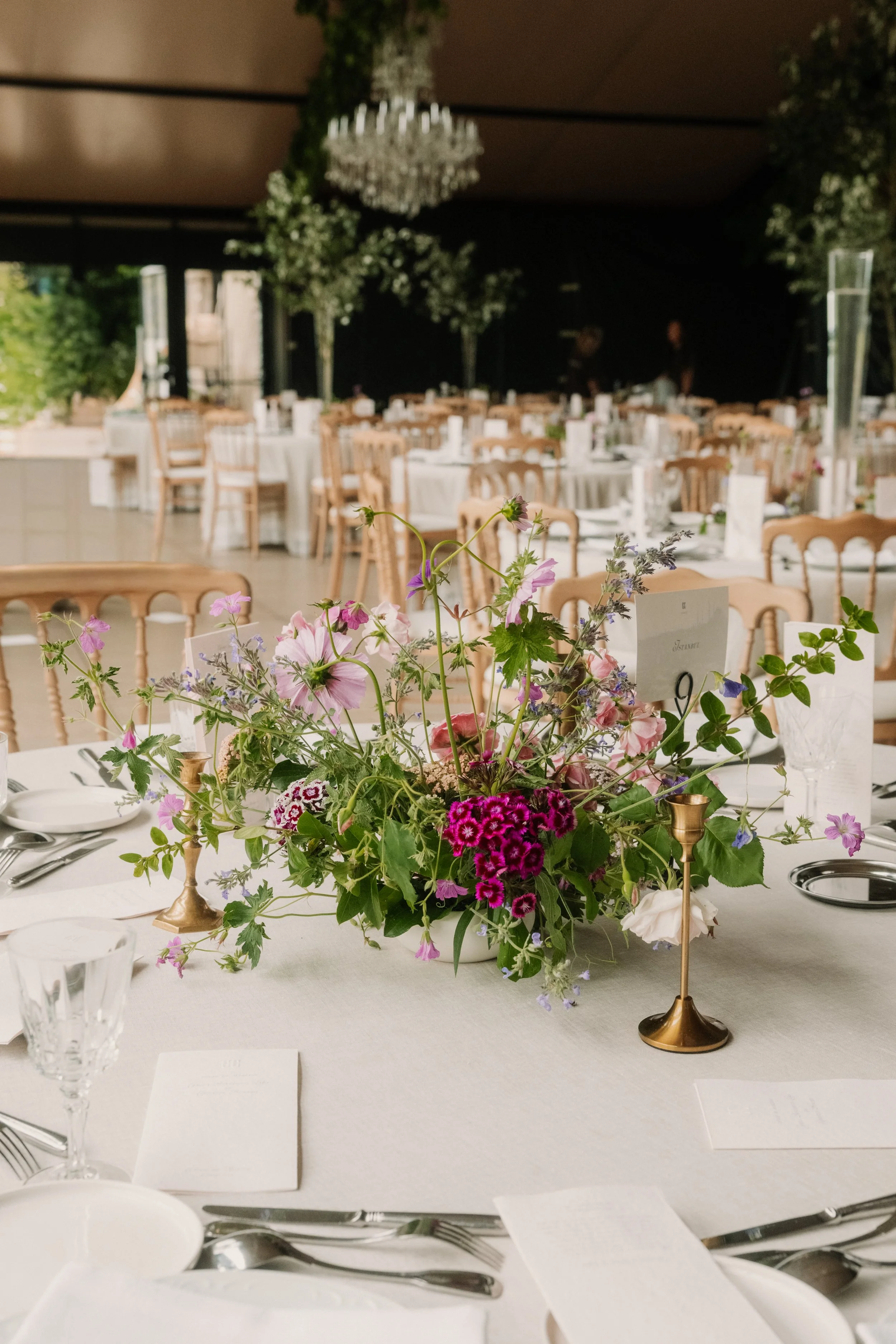
Inside the tent, the work was different. The ceiling structure carried the greenery and gave height to the reception. On the tables, the flowers were lighter and more delicate. We alternated tall vases with branches and small ikebana-style bowls, with other tables receiving more classic centrepieces.
That mix helped the room breathe.
With 250 guests, the scale was already there. The flowers needed to give rhythm, not take over every surface.
A bright garden palette
The palette stayed luminous: whites, soft pinks, fresh greens, with deeper fuchsia touches.
Those stronger colours were important. They brought energy to the design and, in a subtle way, echoed the bride’s Colombian side. I did not want the colour to feel forced. It had to appear in small moments, through the flowers, almost like accents moving through the estate.
We used flowers such as peonies, perennial geraniums, sweet William, snapdragons and wallflowers, with a lot of foliage and branches to keep the garden structure present.
The final feeling was fresh, colourful and quite free.
Designing with the whole place in mind
For me, the most interesting part of this wedding was that the flowers had to connect several spaces.
The house, the entrance, the steps, the garden, the glass tent, the tables, the ceiling, the view outside. Each area needed something different, but everything had to belong to the same floral language.
That is often what makes a private estate wedding feel resolved. The flowers respond to the place, to the season, to the scale of the reception, and to the way people will actually move through the day.
Here, the preparation was intense. There was height, wind, glass, logistics, hydration, large urns, delicate table flowers and a lot of greenery to install.
But the intention stayed simple: to receive everyone at home, with the garden close by.