
A Château de Champlâtreux Wedding Created in Six Days
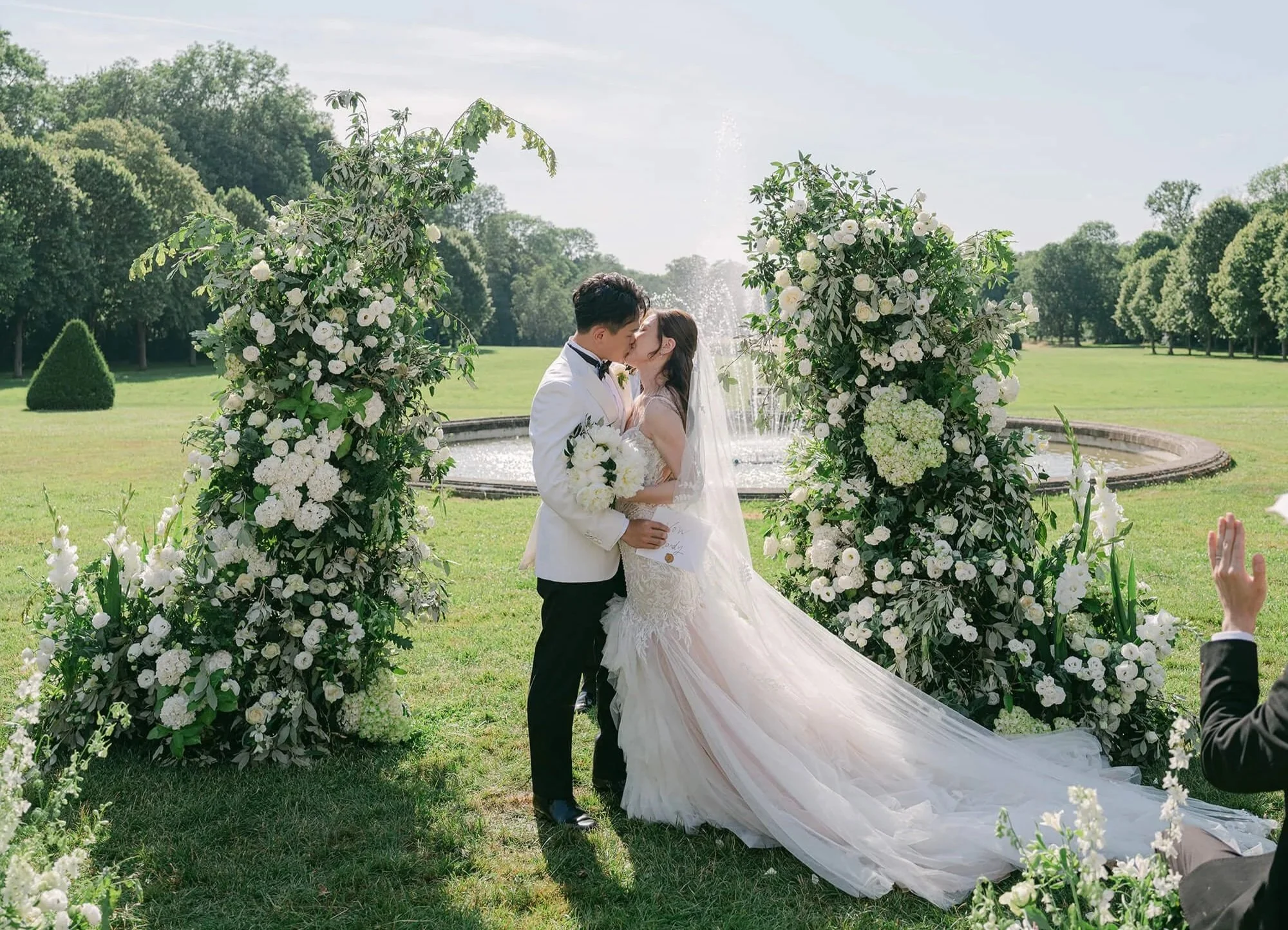
You might not believe it, but we were contacted for Helen and Randy’s wedding at Château de Champlâtreux only six days before the celebration.
Six days to understand the direction, gather a team, source the flowers and prepare the floral design for the ceremony, cocktail and dinner.
The wedding planner trusted us from the beginning. That trust was essential because, with such a short timeline, every decision had to be made quickly and calmly. It was also an extremely hot weekend.
The project came together because the team adapted at every stage, from preparing the flowers in the château cellar to completing the cocktail arrangements as the first guests arrived.
A wedding floral design prepared in six days
The project began on Monday, with the wedding taking place the following Sunday.
Within a few days, we created the moodboard, brought together a team of freelance florists, organised the structures and sourced the flowers we needed.
A large part of the floral material came from our garden. With such a short preparation time, we had the freedom to select flowers based on how they were opening and what held up well in the heat.
We completed the selection with seasonal flowers sourced specifically for the wedding.
The work covered every part of the day: a long floral aisle and ceremony installation, two bridal bouquets, cocktail arrangements and flowers for dinner inside the château.
A wedding venue close to Paris
Château de Champlâtreux is located in Épinay-Champlâtreux, in the Val-d’Oise, north of Paris.
The château describes itself as approximately thirty minutes from the centre of Paris and fifteen minutes from Charles de Gaulle Airport. Journey times naturally depend on traffic, but the location is useful for destination weddings with guests arriving through Paris.
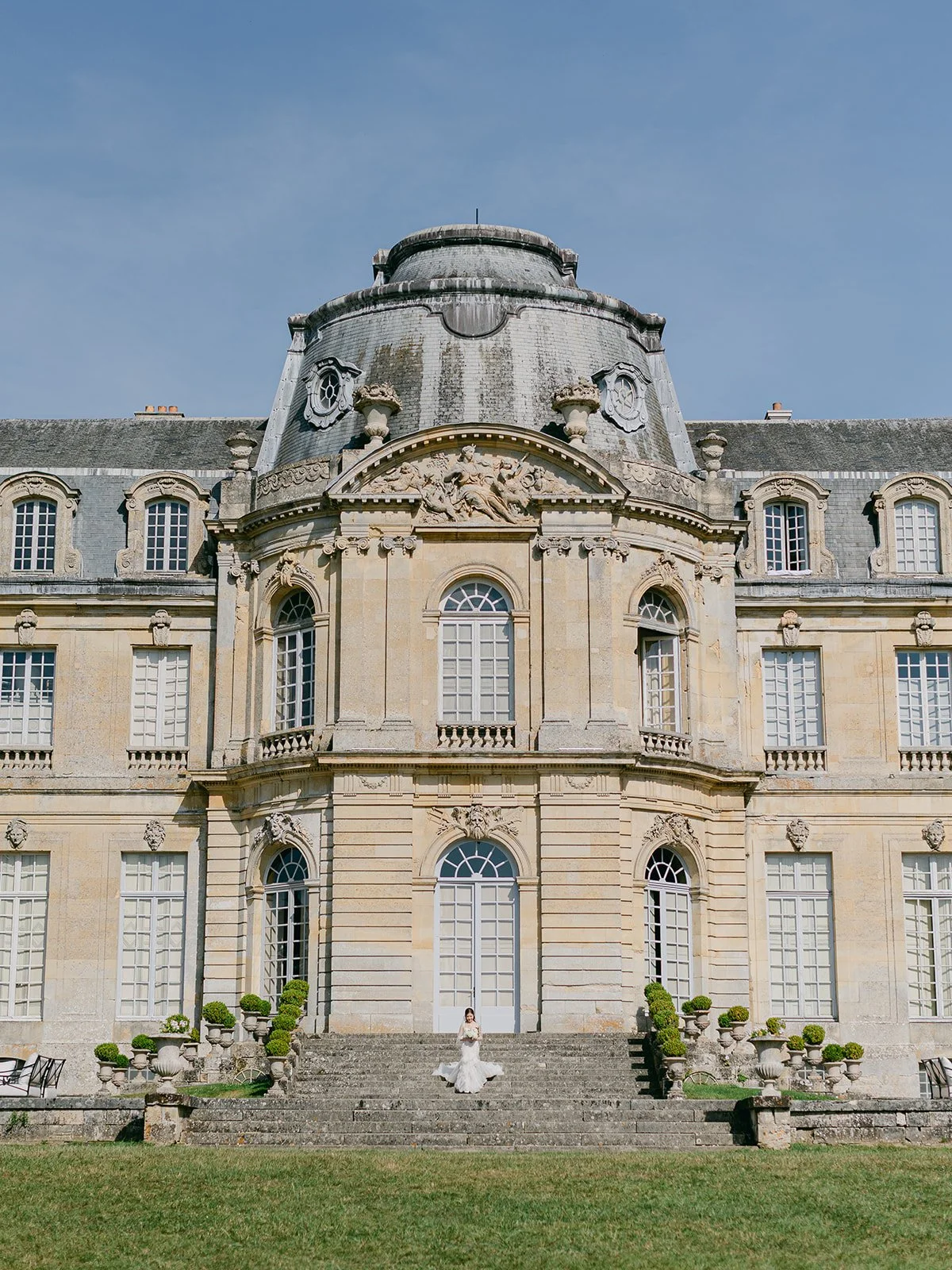
The château as it stands today was built between 1751 and 1757 by the architect Jean-Michel Chevotet. It was conceived as a country residence and a place for receiving guests, with four large state rooms on the ground floor.
The Domaine de Champlâtreux, including its buildings and park, was classified as a French historic monument in 1989.
You feel that history as soon as you begin working in the rooms. The fireplaces, proportions and long views through the property already give each space a clear identity.
The flowers need to work with those elements. Scale, placement and the amount of space left around each composition become especially important.
An outdoor ceremony in the château park
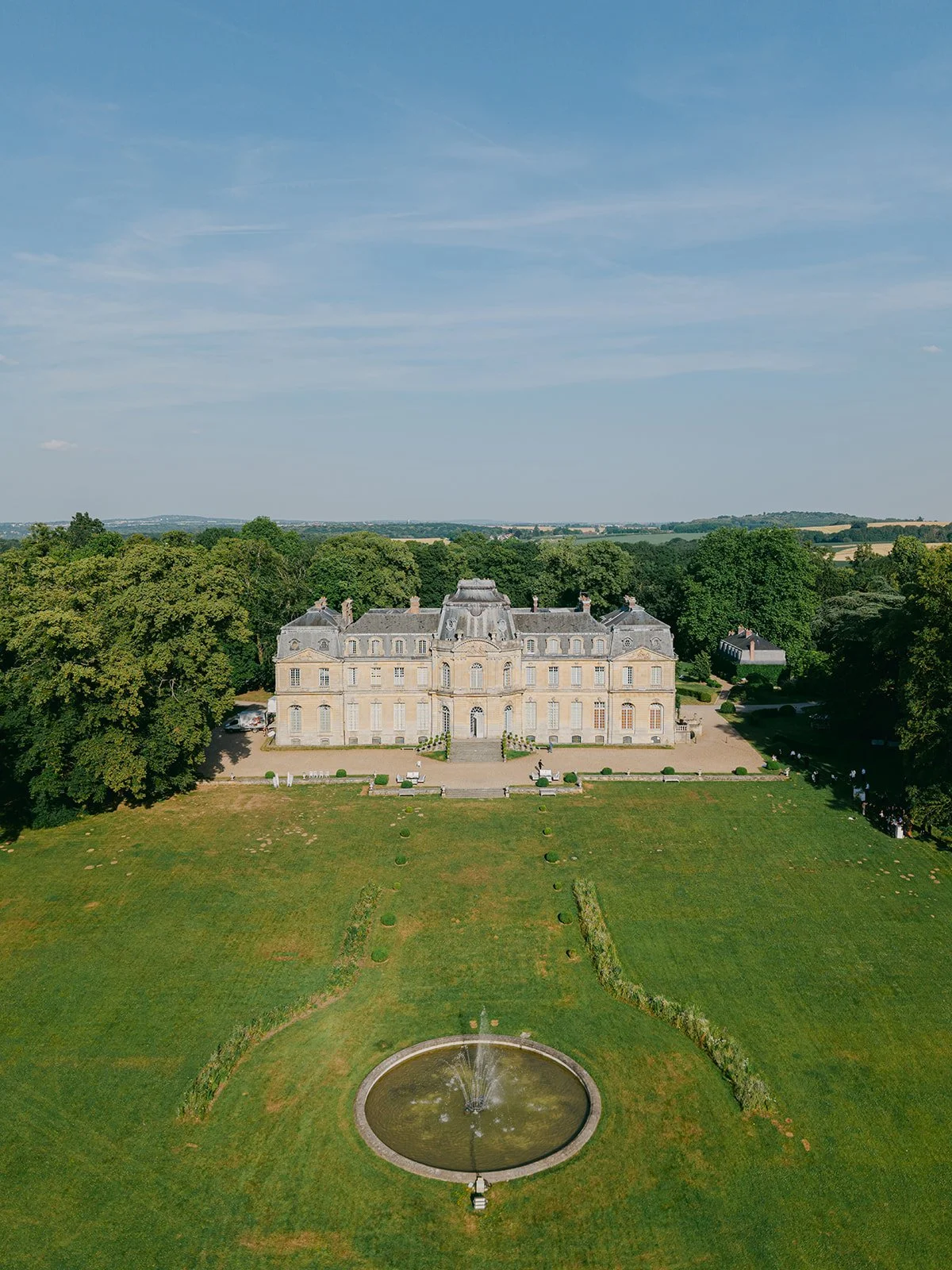
The formal French gardens were replaced in 1823 by a landscape park designed by the Thouin brothers.
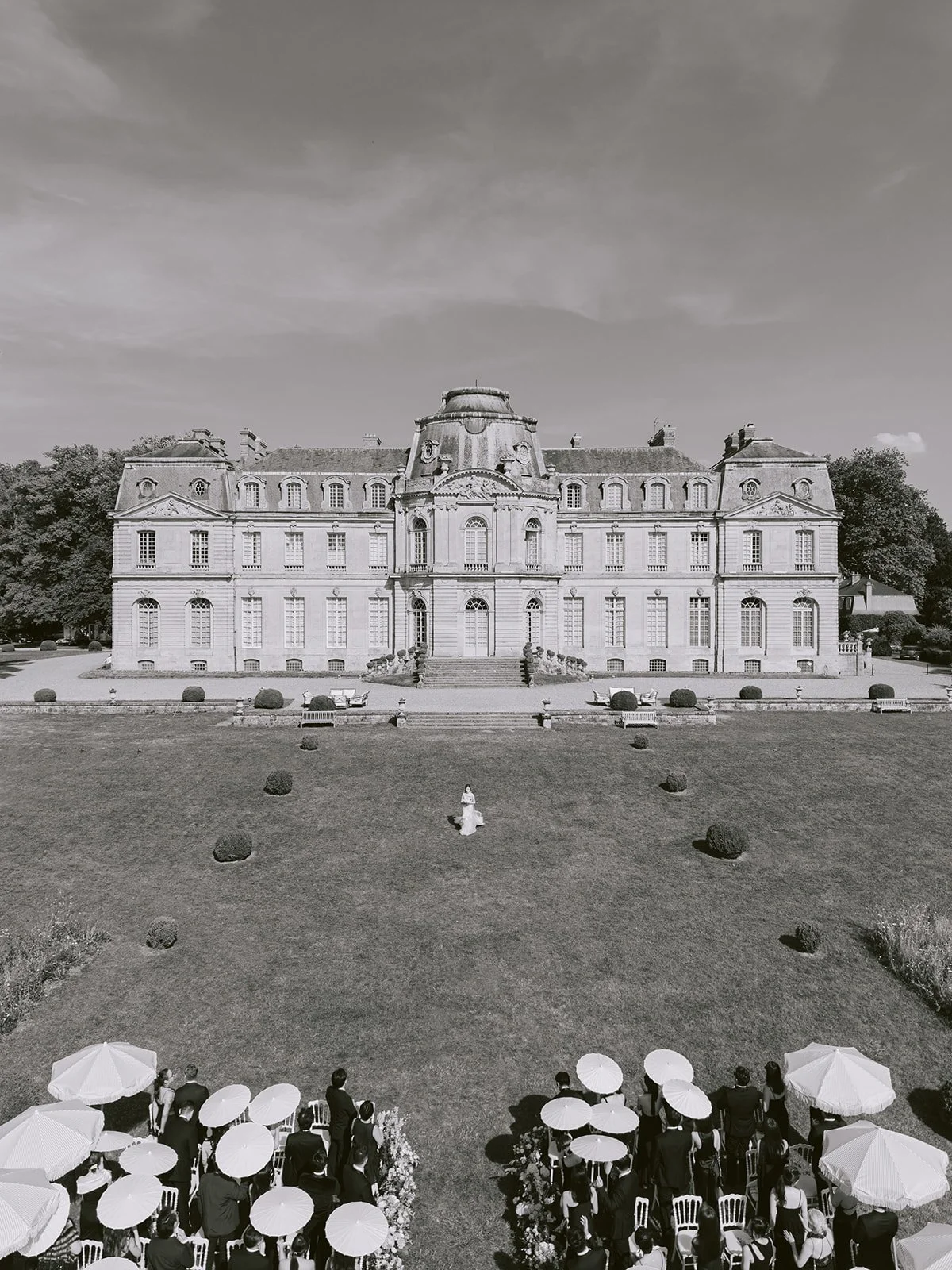
The park has a long view bordered by trees, with an ornamental stone pond positioned along the central perspective. The château also presents the grounds as a setting for receptions.
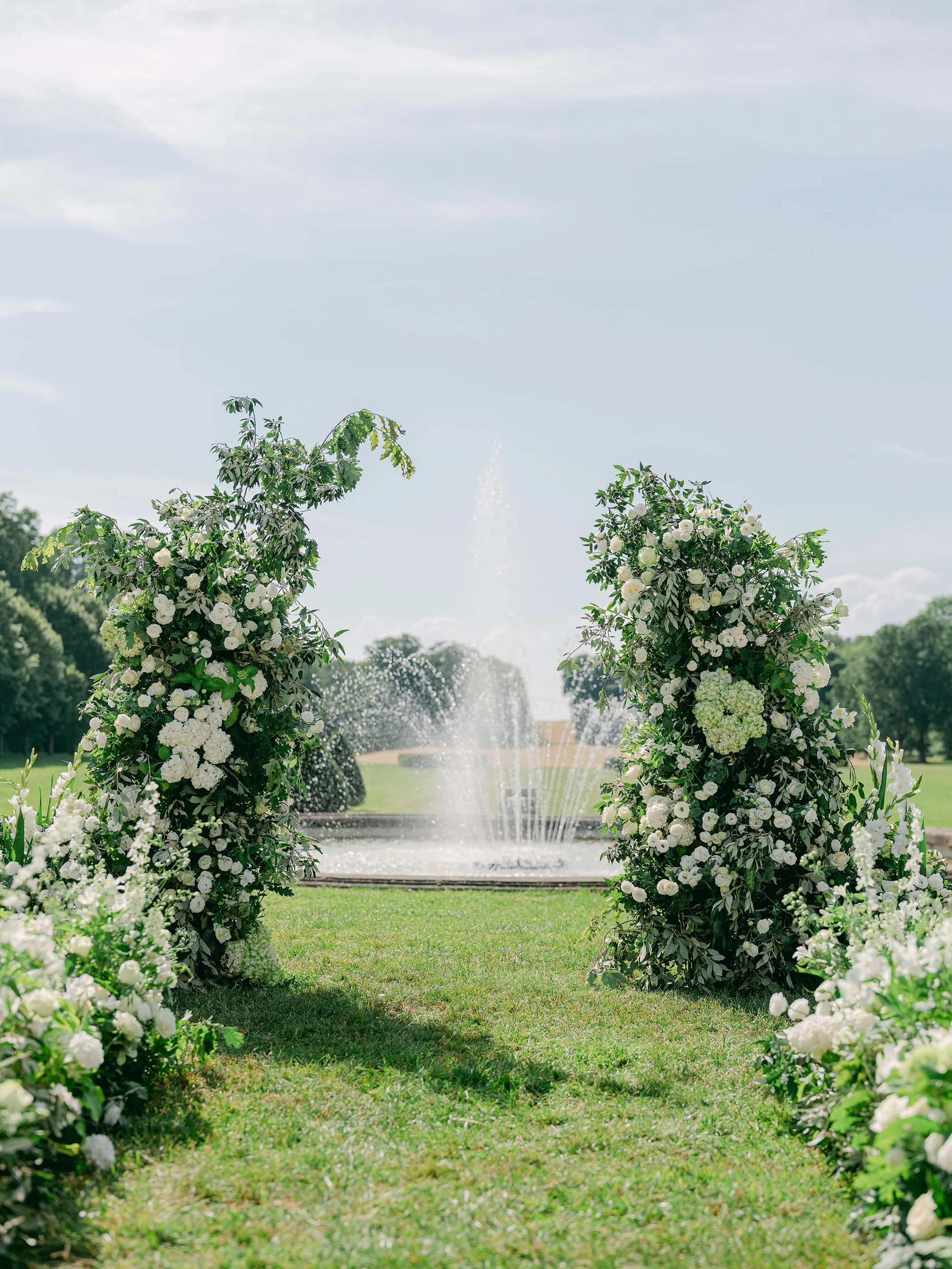
We used that long perspective as the starting point for Helen and Randy’s ceremony.
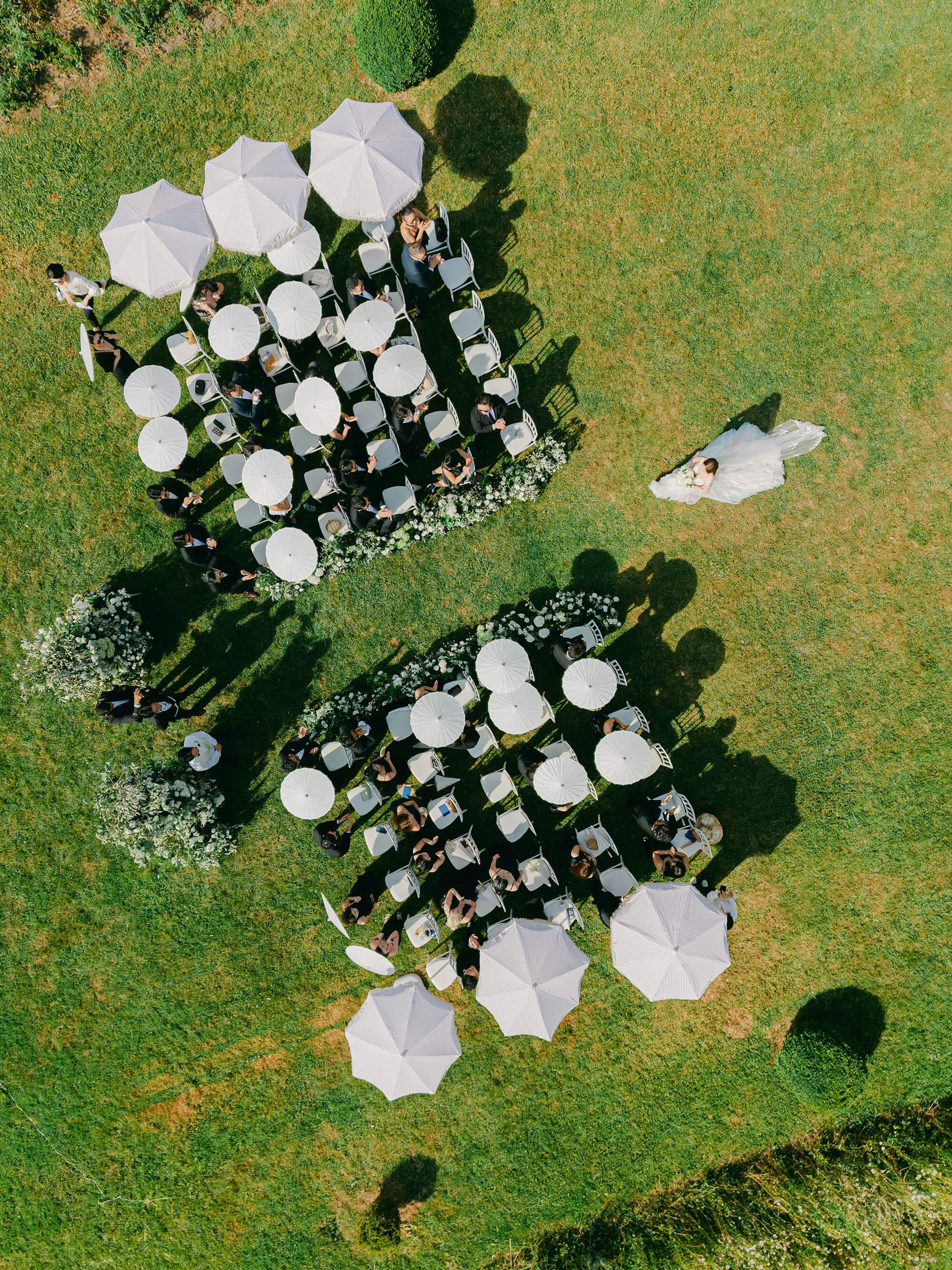
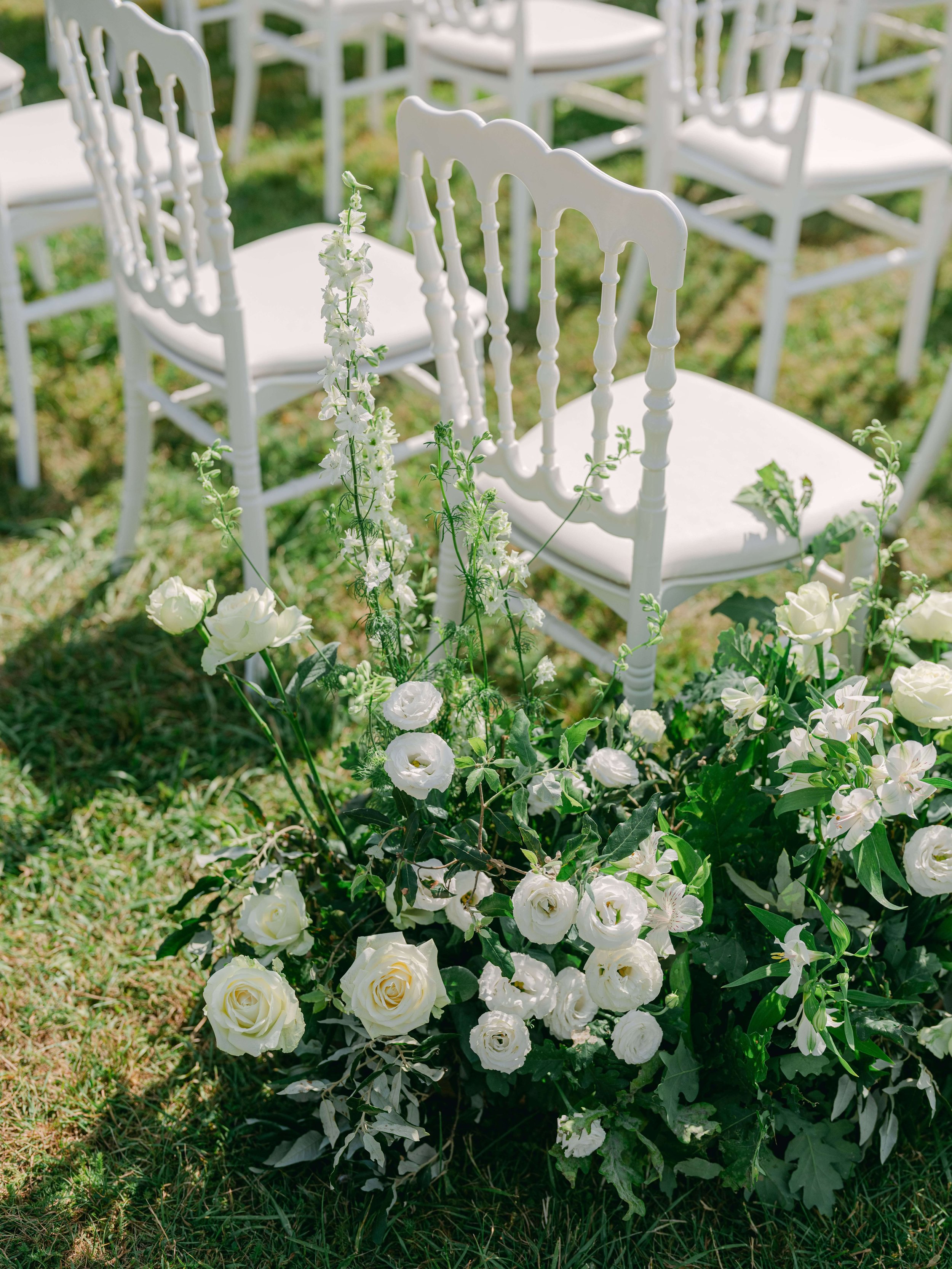
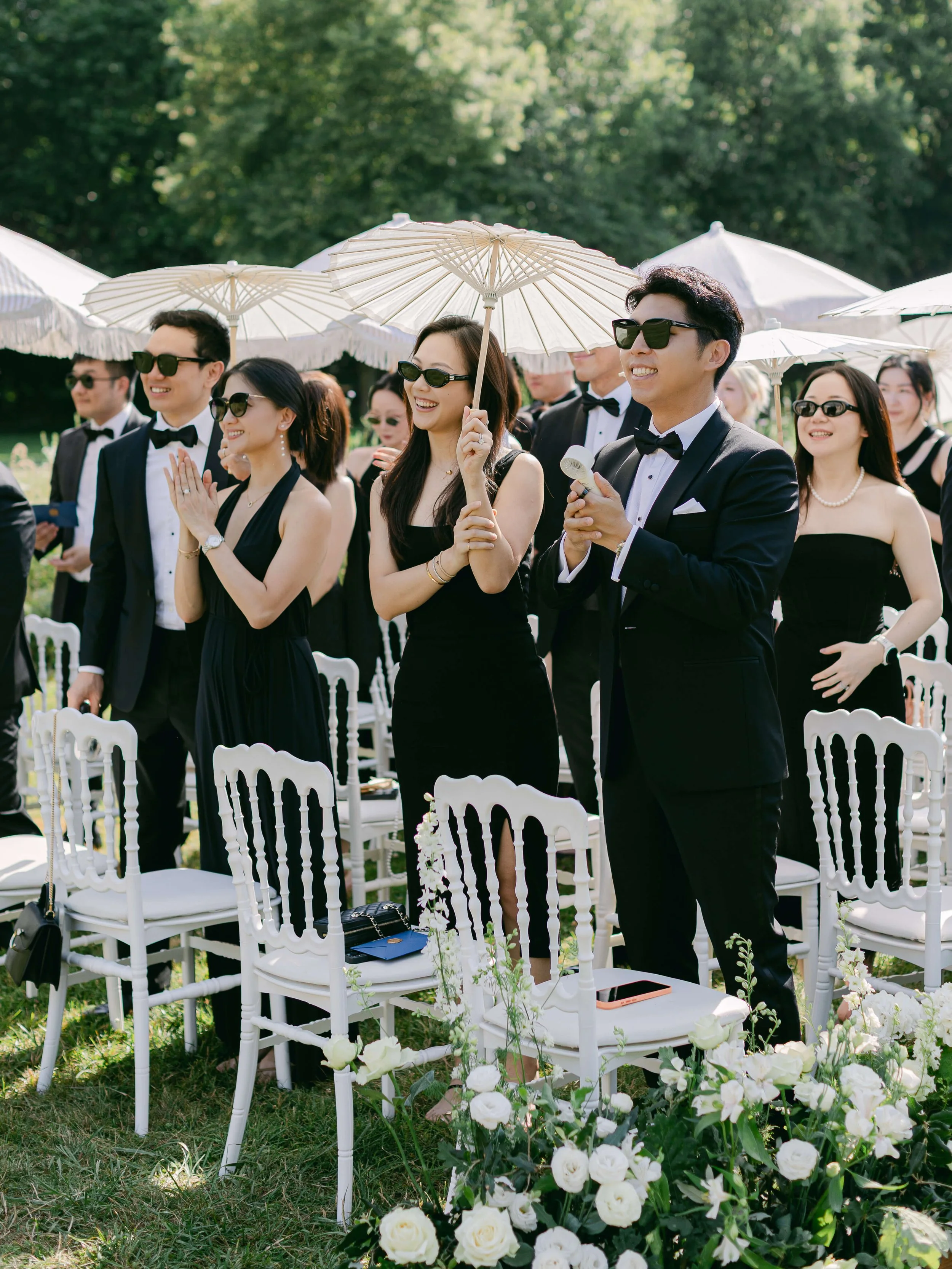
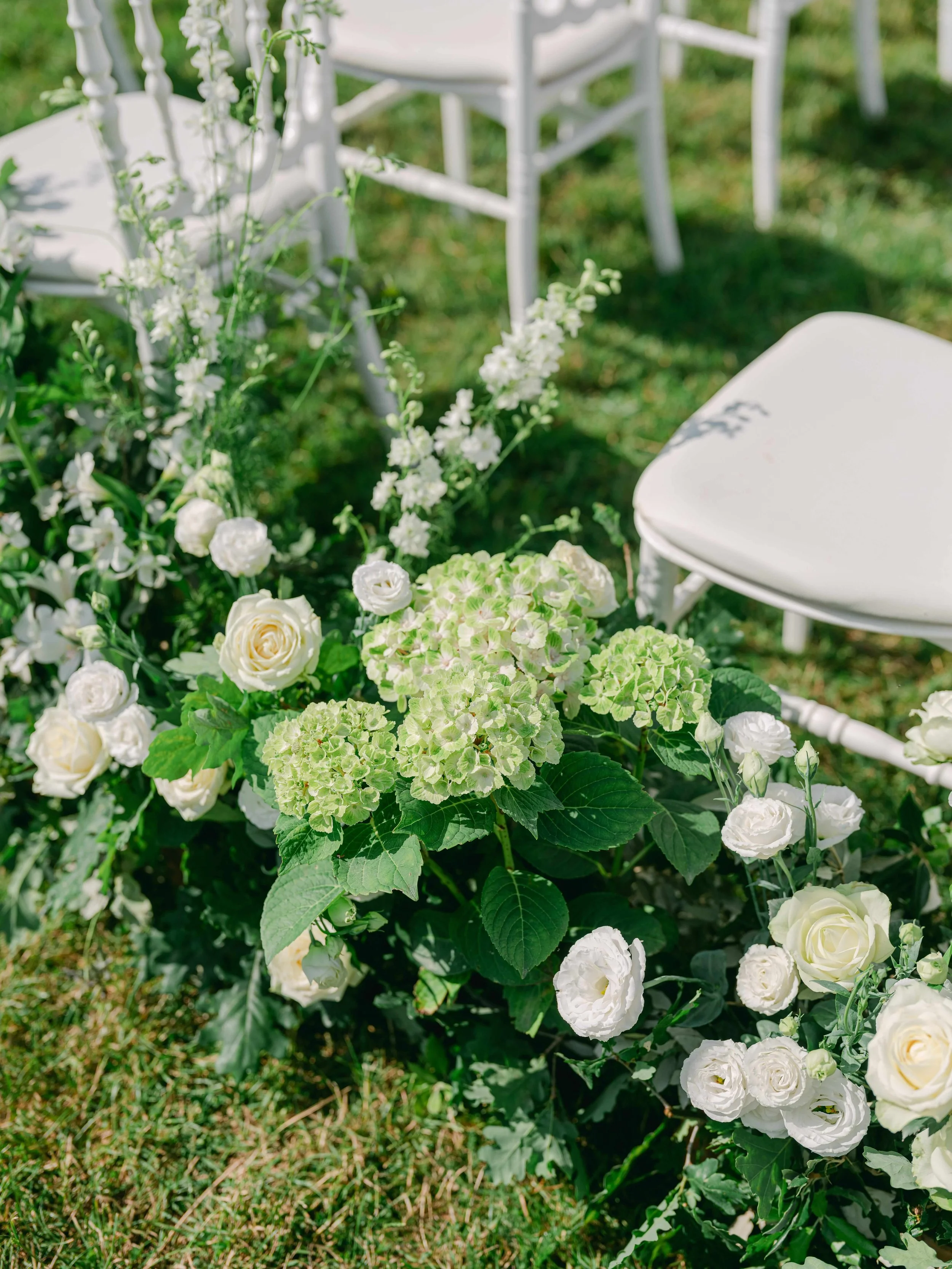
A floral aisle crossed the lawn and led towards the water. Two large arrangements framed the ceremony area, with enough space around them to keep the pond, the trees and the scale of the park visible.
The ceremony palette was mainly white. We worked with peonies, roses, garden roses, lisianthus, delphiniums, hydrangeas and softer material gathered from the garden.
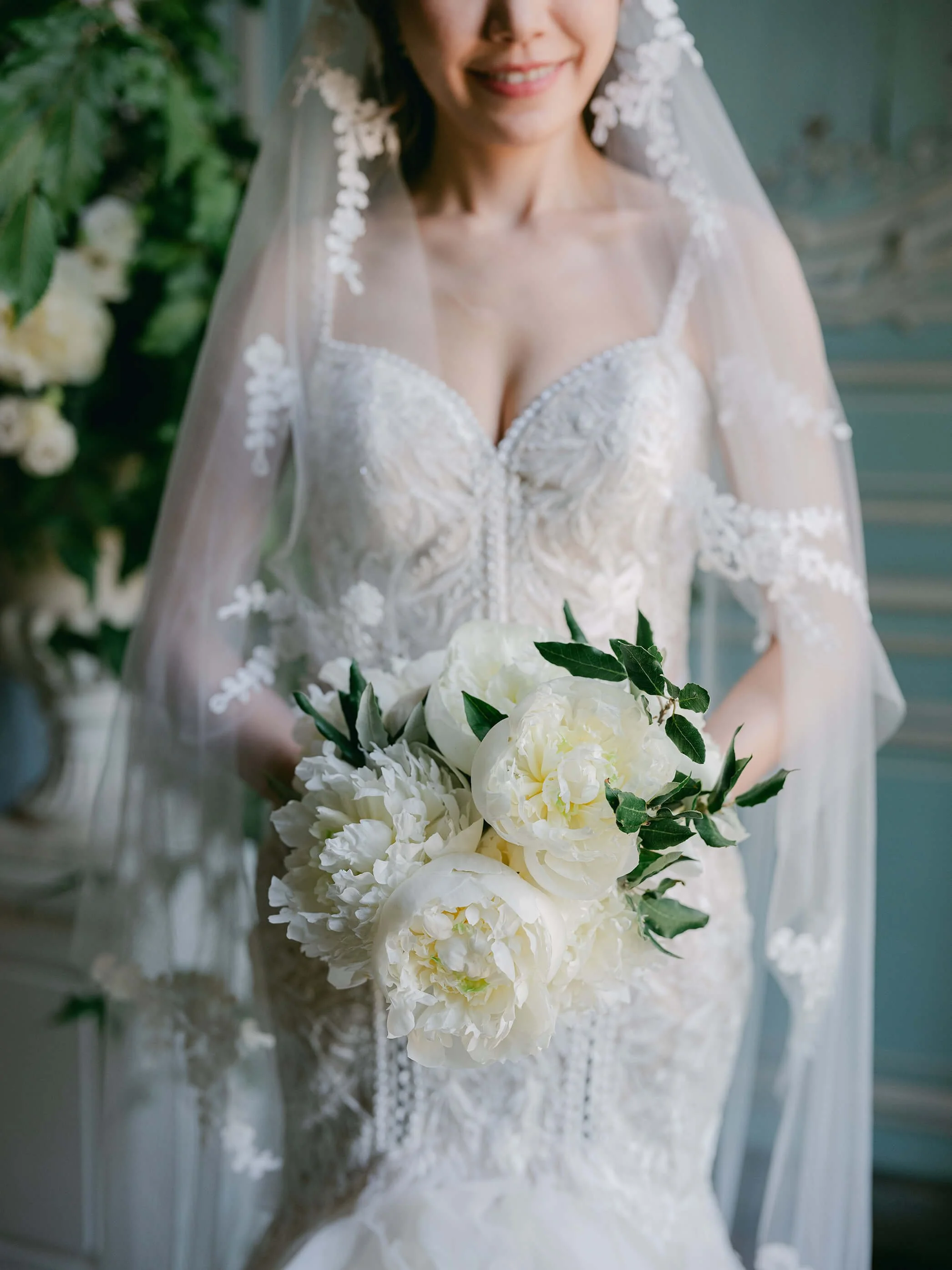
Helen also chose two bridal bouquets.
For the ceremony, she carried a bouquet built around white peonies. Her second bouquet used calla lilies in a more contemporary, slightly cascading shape.
Preparing wedding flowers during extreme summer heat
The heat affected every part of the production.
Flowers are alive, so hydration, shade and the amount of time they spend outside make a real difference. We had to organise the work so that each arrangement remained protected for as long as possible.
Hugo built a temporary shaded structure above the area where we were preparing the ceremony installation. He used the same type of shade cloth normally placed over greenhouses, which protected both the flowers and the team.
It was also our first time using emergency blankets to reflect the heat. We learned very quickly which side needed to face the sun.
The most useful room that day was completely hidden from the guests.
The château allowed us to work in its cellar, where the temperature was much cooler. We prepared the arrangements there and brought them upstairs gradually, following the order in which they were needed.
The flowers stayed fresh, and the team could work in much better conditions.
This access was arranged specifically for Helen and Randy’s wedding. I would not assume that the cellar is normally available as a production space for every event.
From the ceremony to the cocktail
The ceremony moved much faster than expected, which immediately reduced the time available for the cocktail installation.
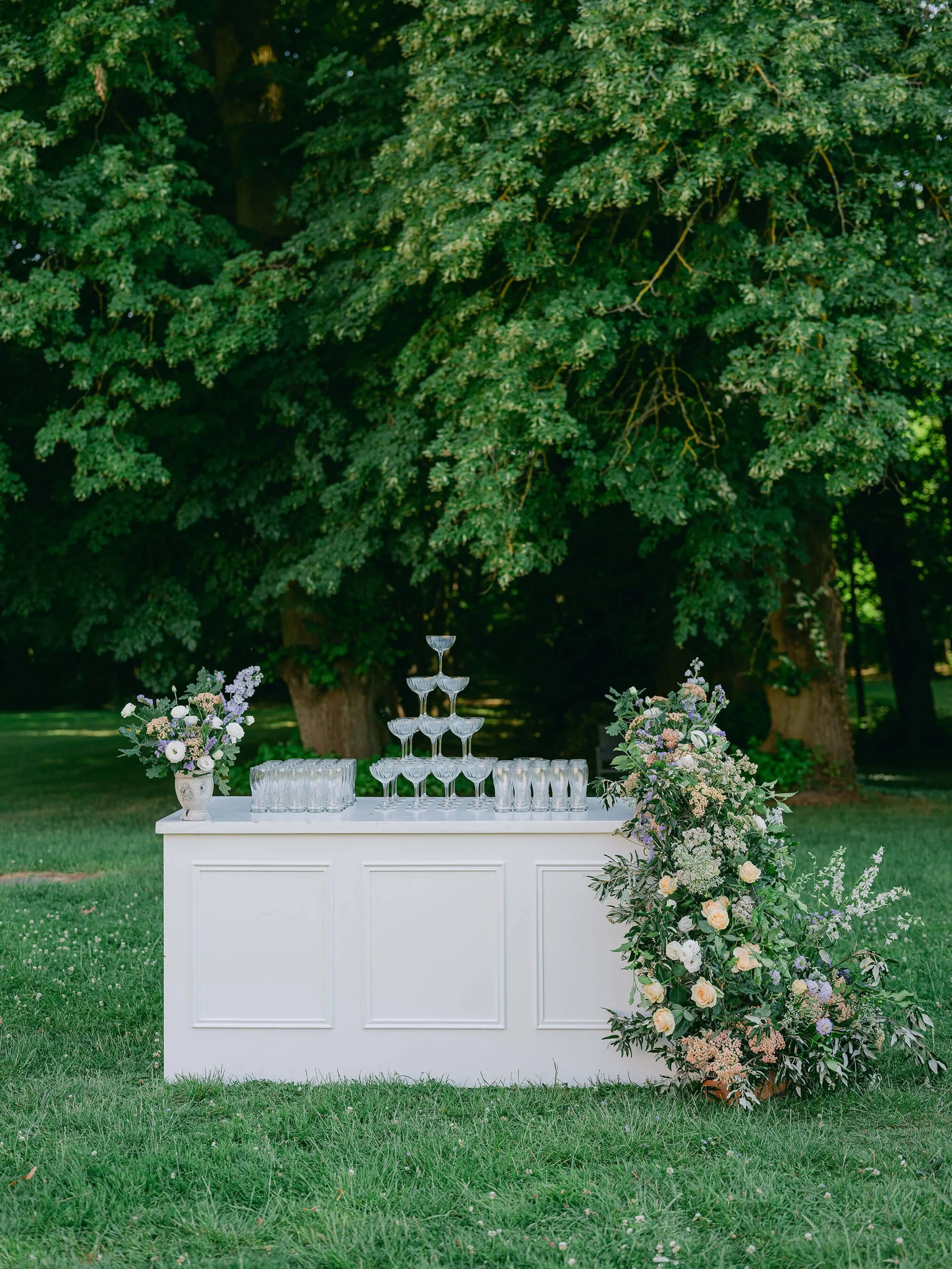
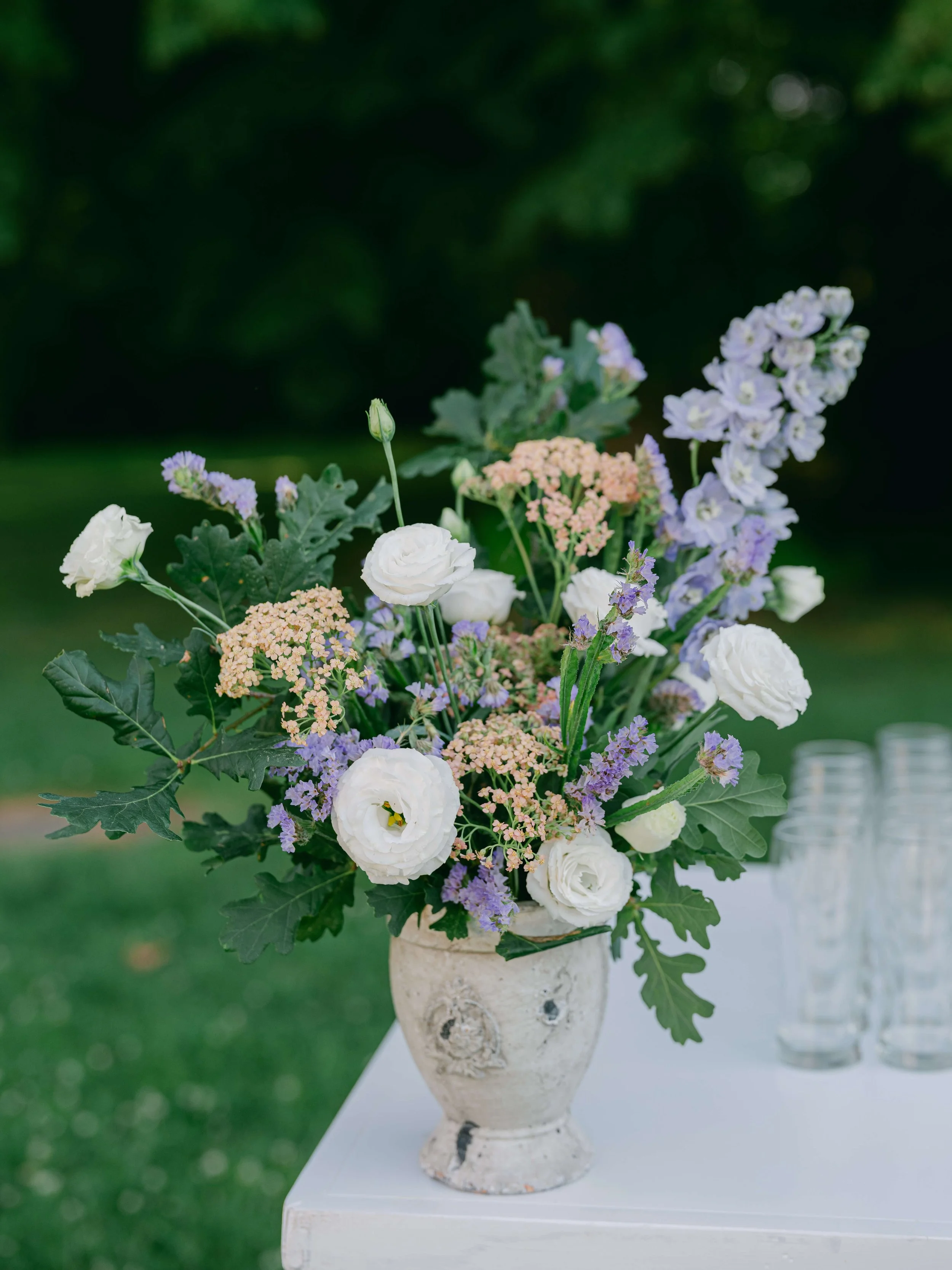
We were still placing the final flowers when Helen, Randy and their guests began walking towards the cocktail area.
We changed the order of work and focused first on everything the guests were about to encounter.
We have worked through enough changing wedding timelines to know what has to happen immediately and what can wait for another ten minutes.
Those decisions stay behind the scenes. The couple can continue moving through the day without having to manage what is happening around them.
Dinner inside Château de Champlâtreux
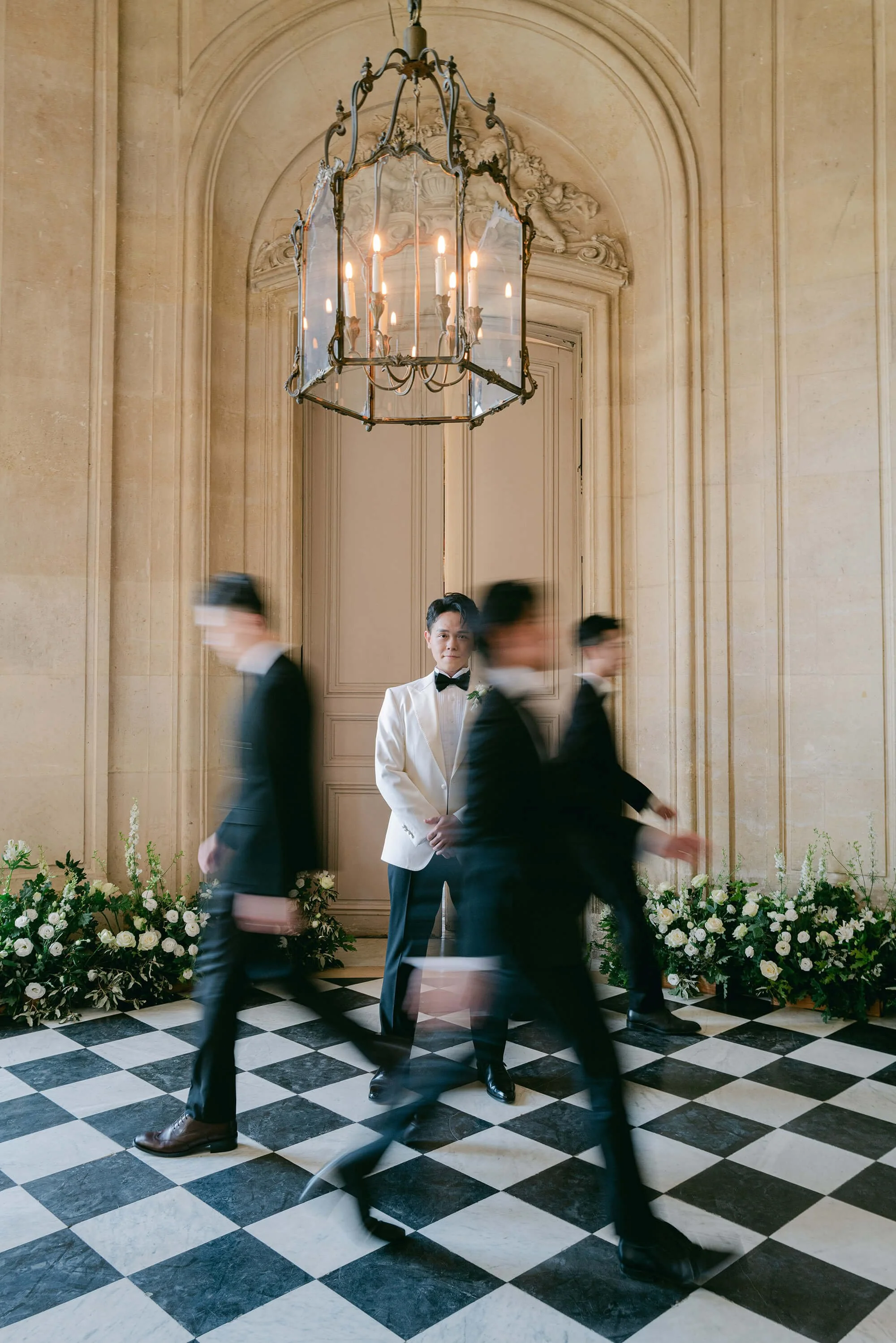
Dinner brought the wedding from the open park into the historic interiors of the château.
The four large reception rooms on the ground floor were originally designed for receiving guests, so they already have the scale and architectural detail needed for a formal celebration.
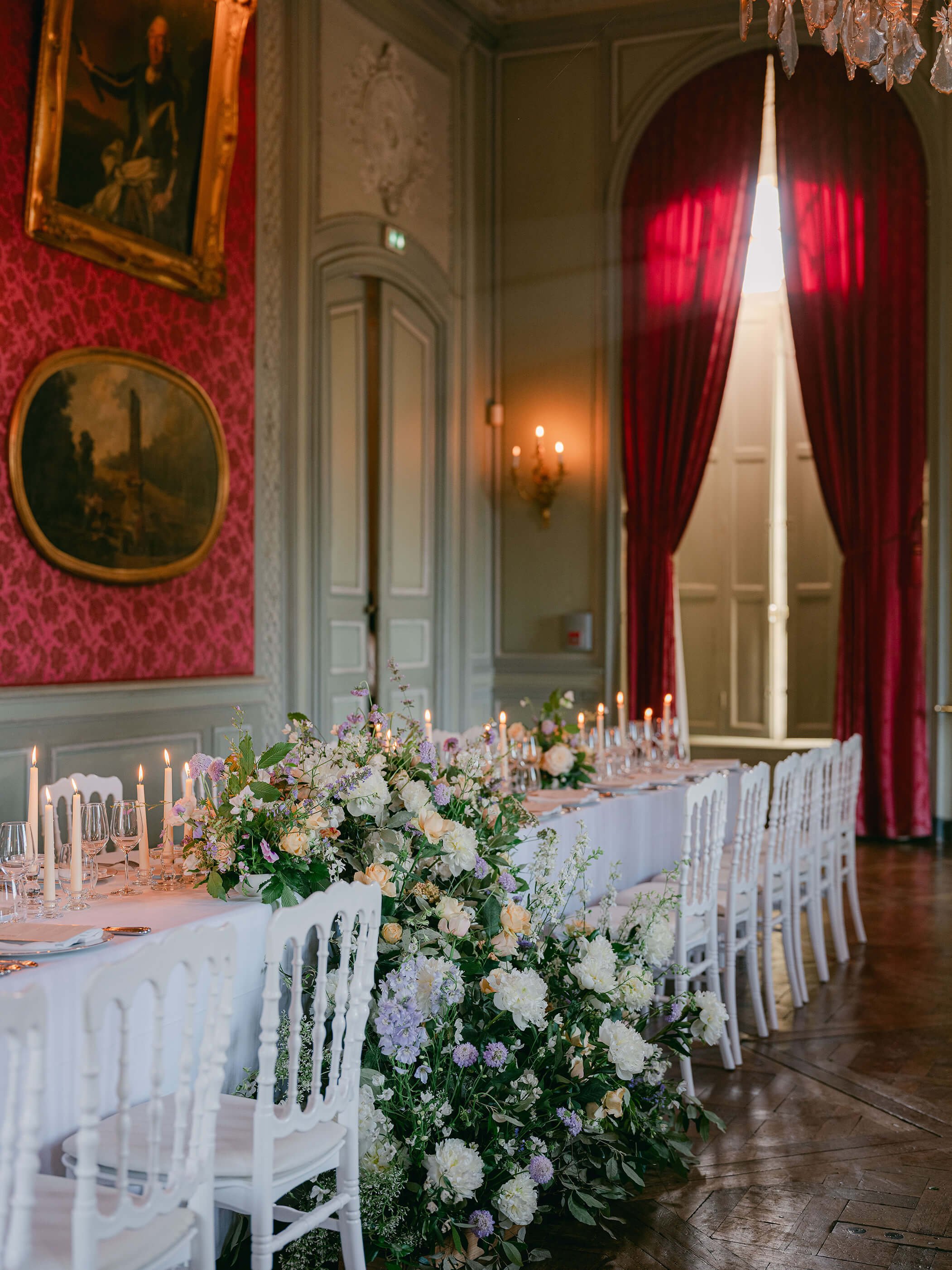
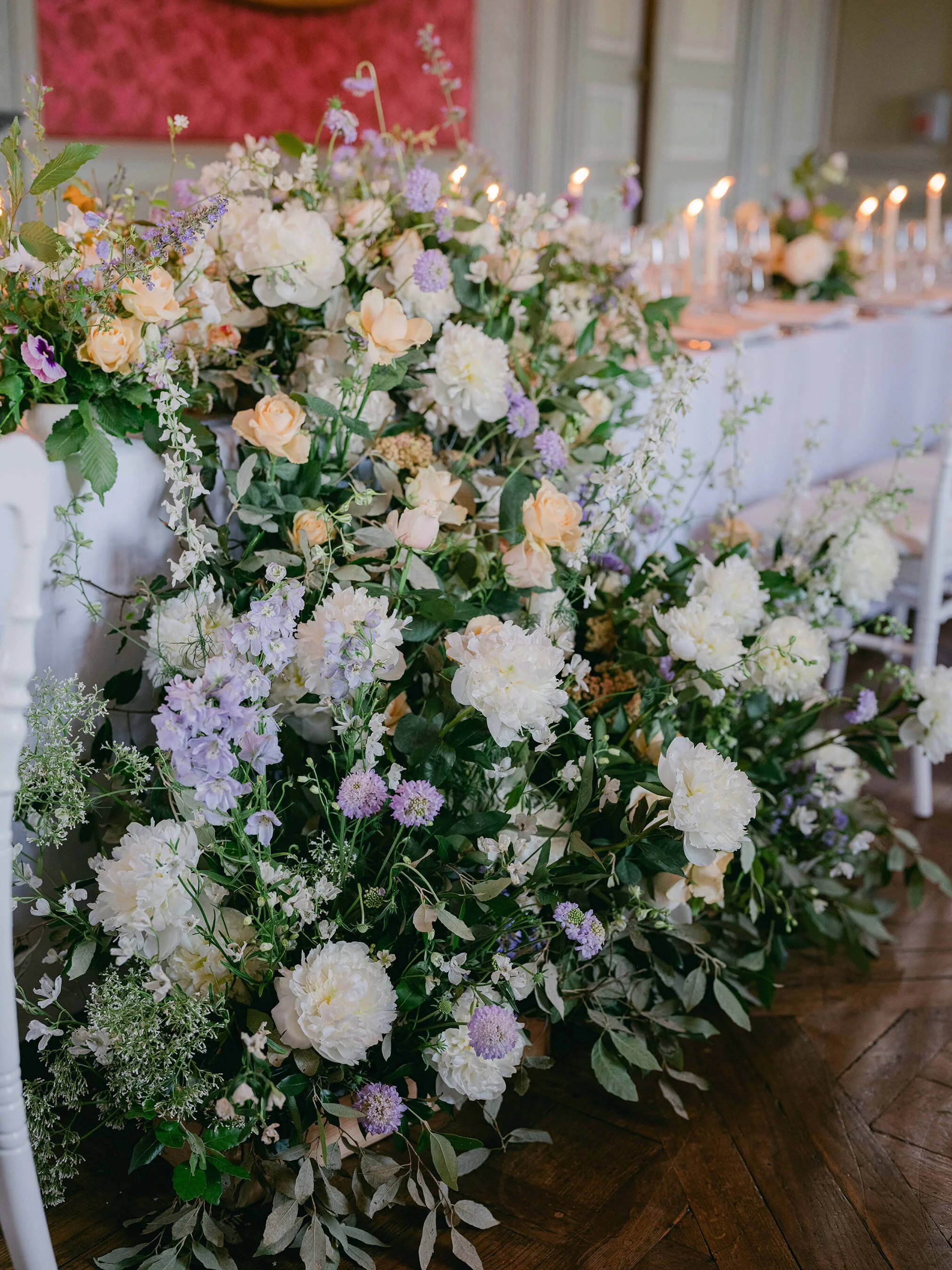
For Helen and Randy, the dinner flowers introduced more colour and a fuller garden feeling.
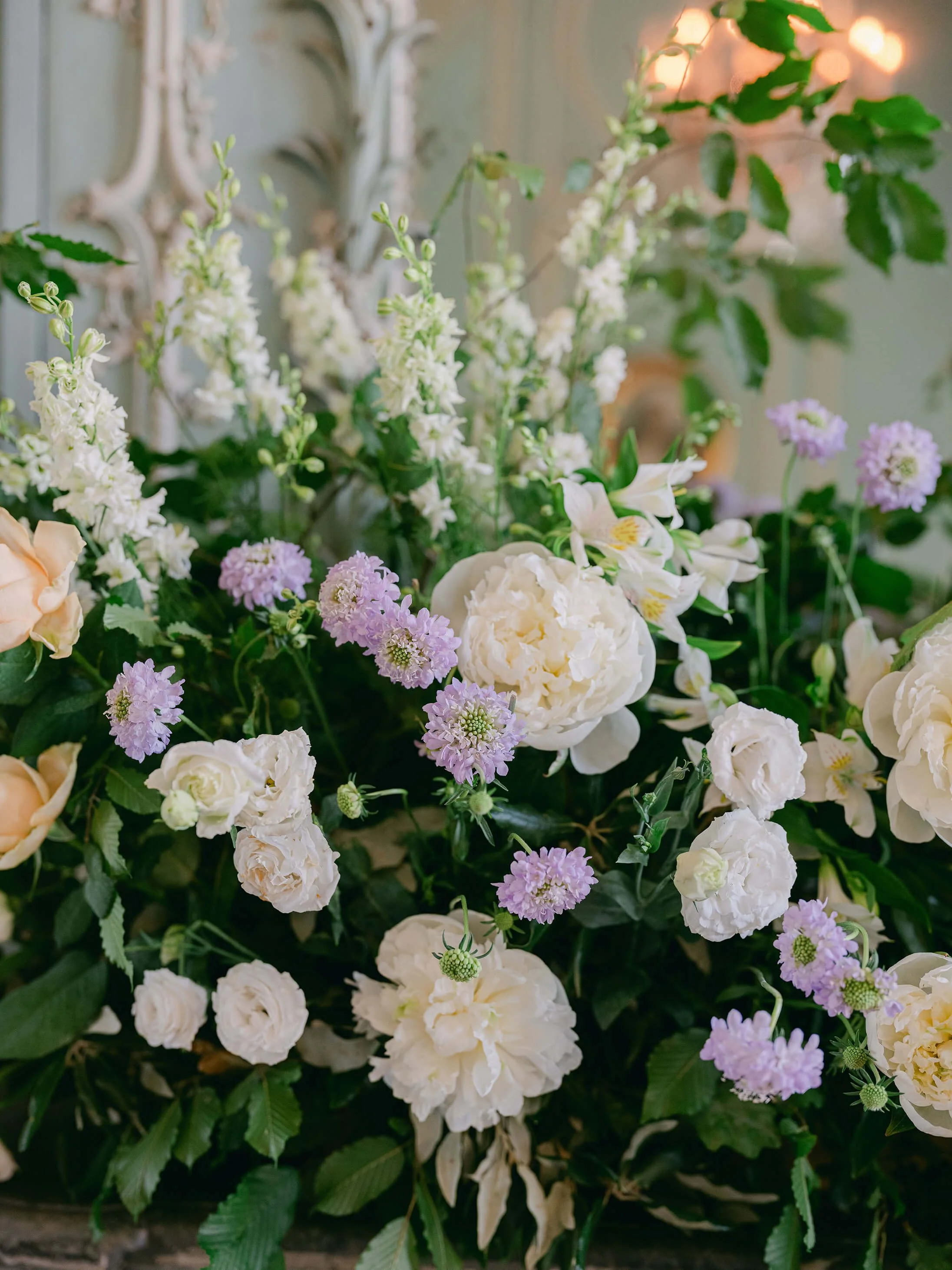
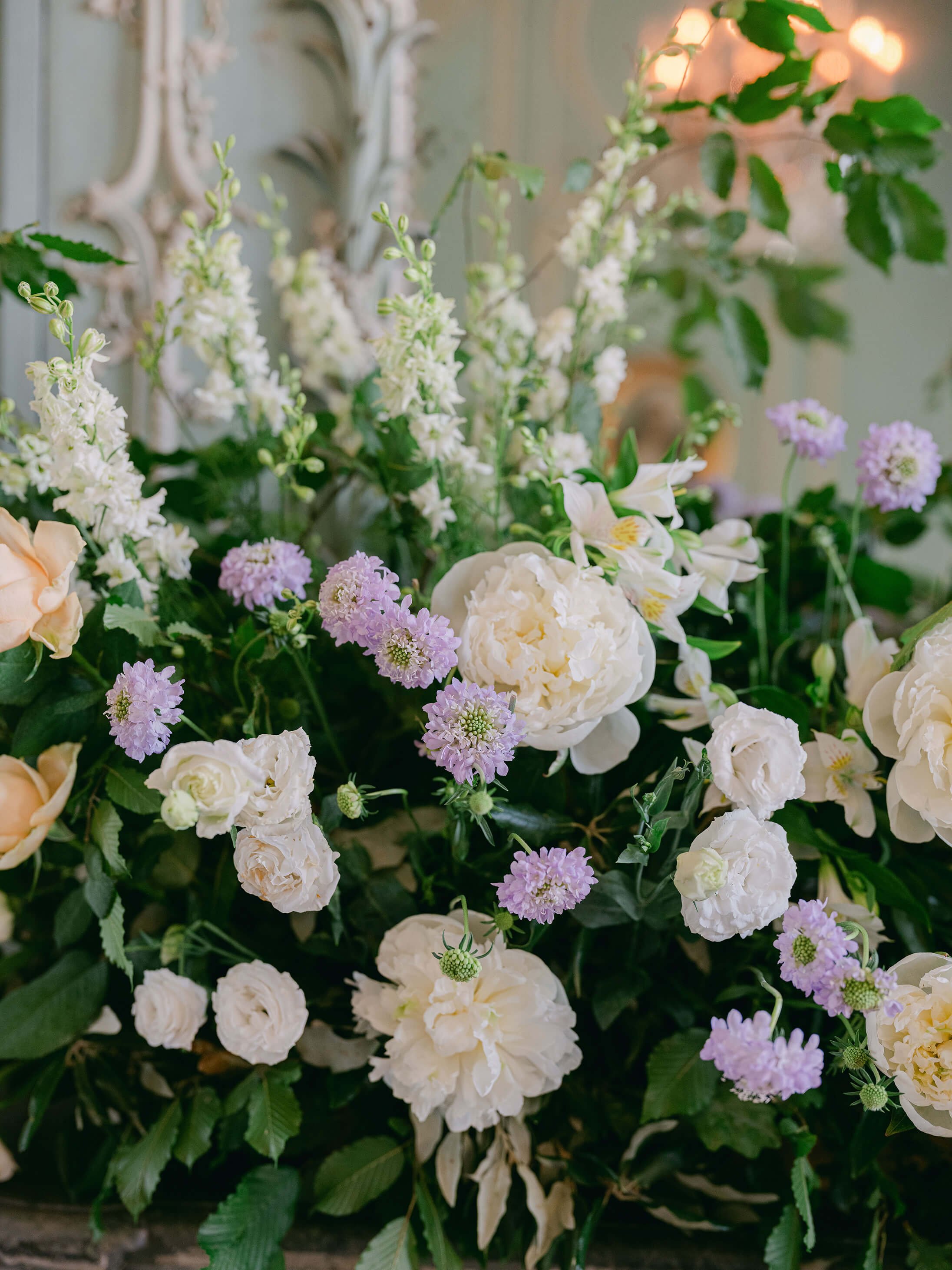
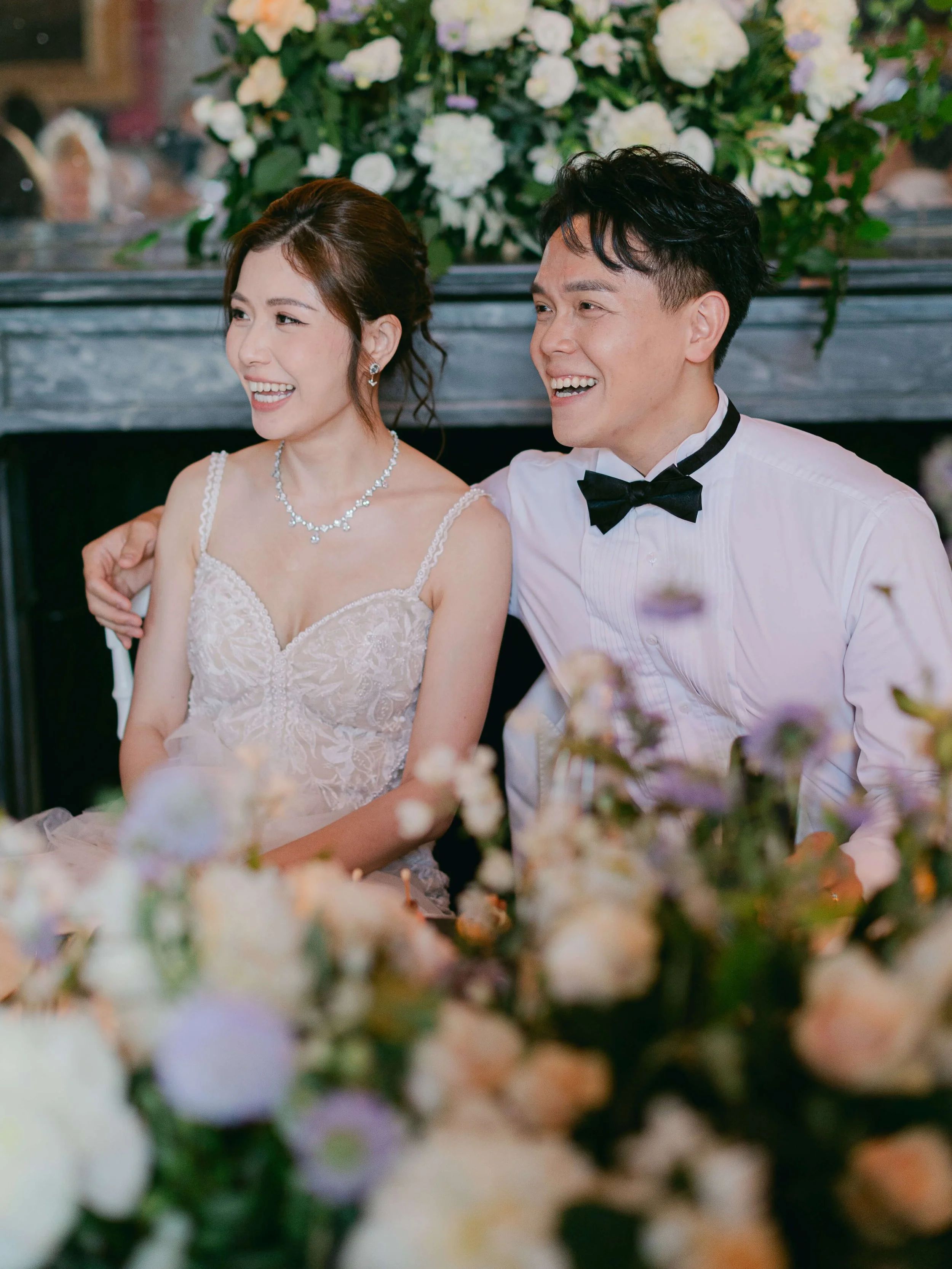
We created a large cascading composition in front of the couple’s table, using peonies, roses, delphiniums, phlox, pansies and flowers from our own garden.
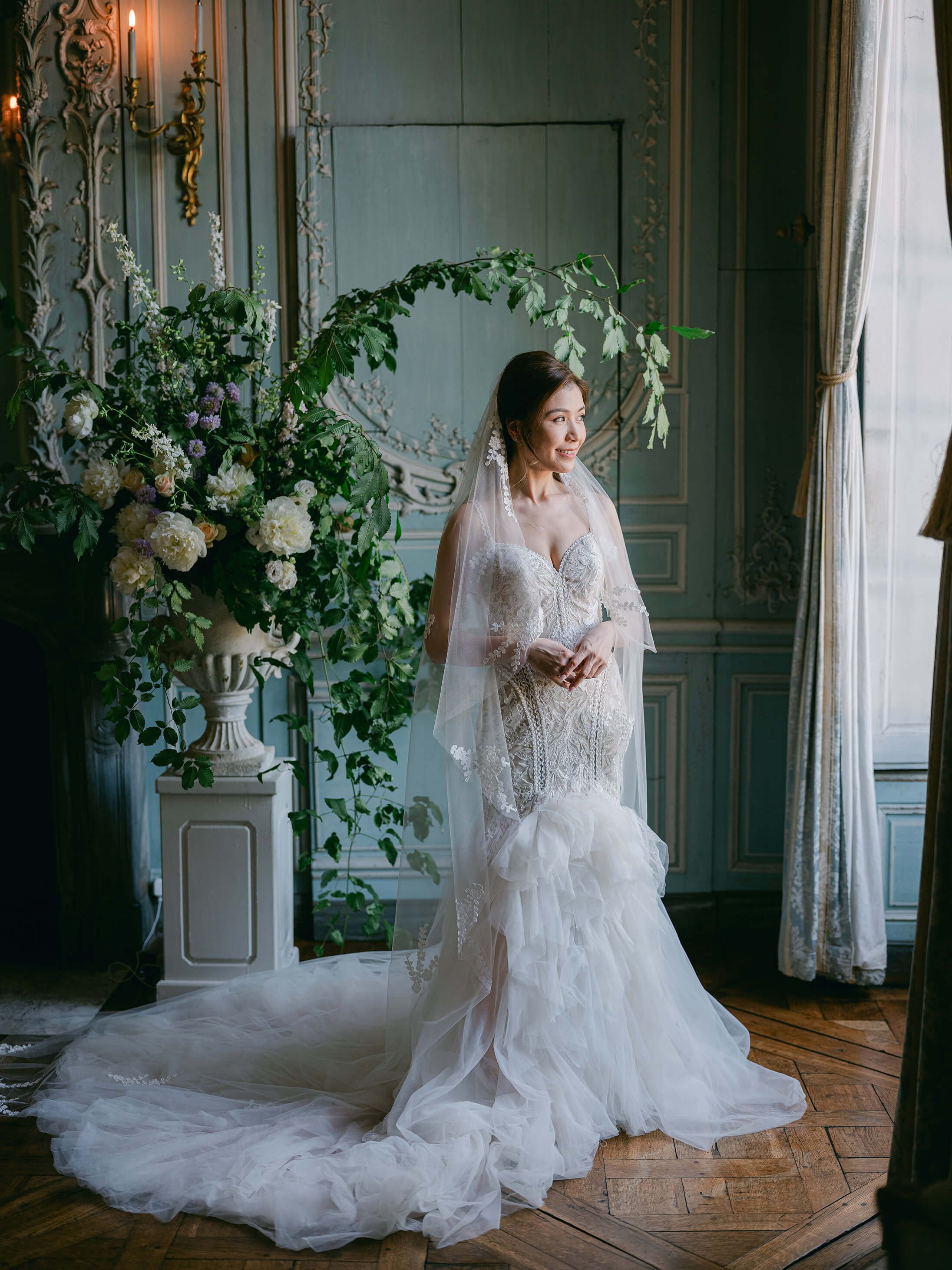
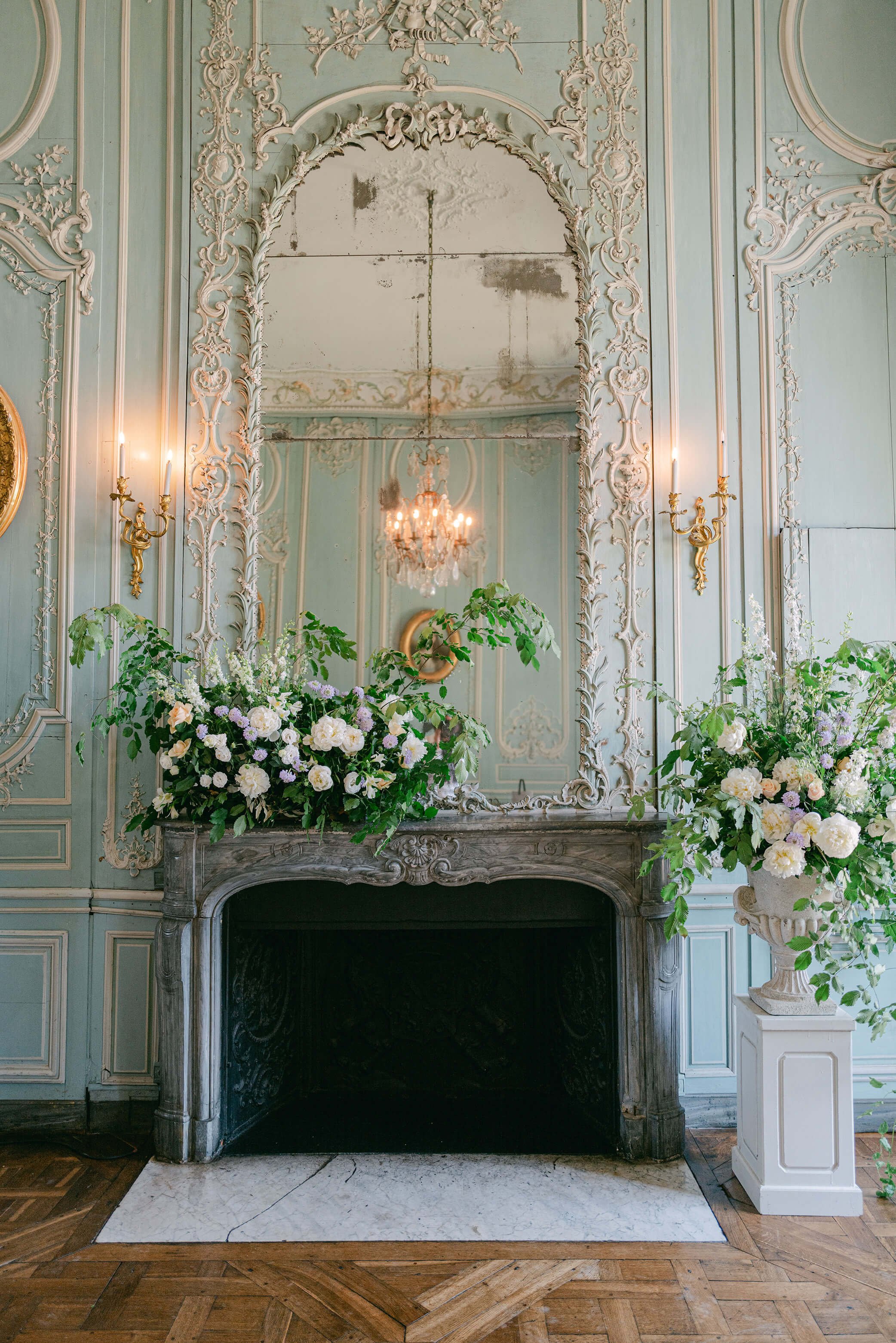
Elsewhere in the château, we worked around the fireplaces and the proportions of the rooms. Long branches allowed the arrangements to extend into the space, while the open areas around them kept the architecture visible.
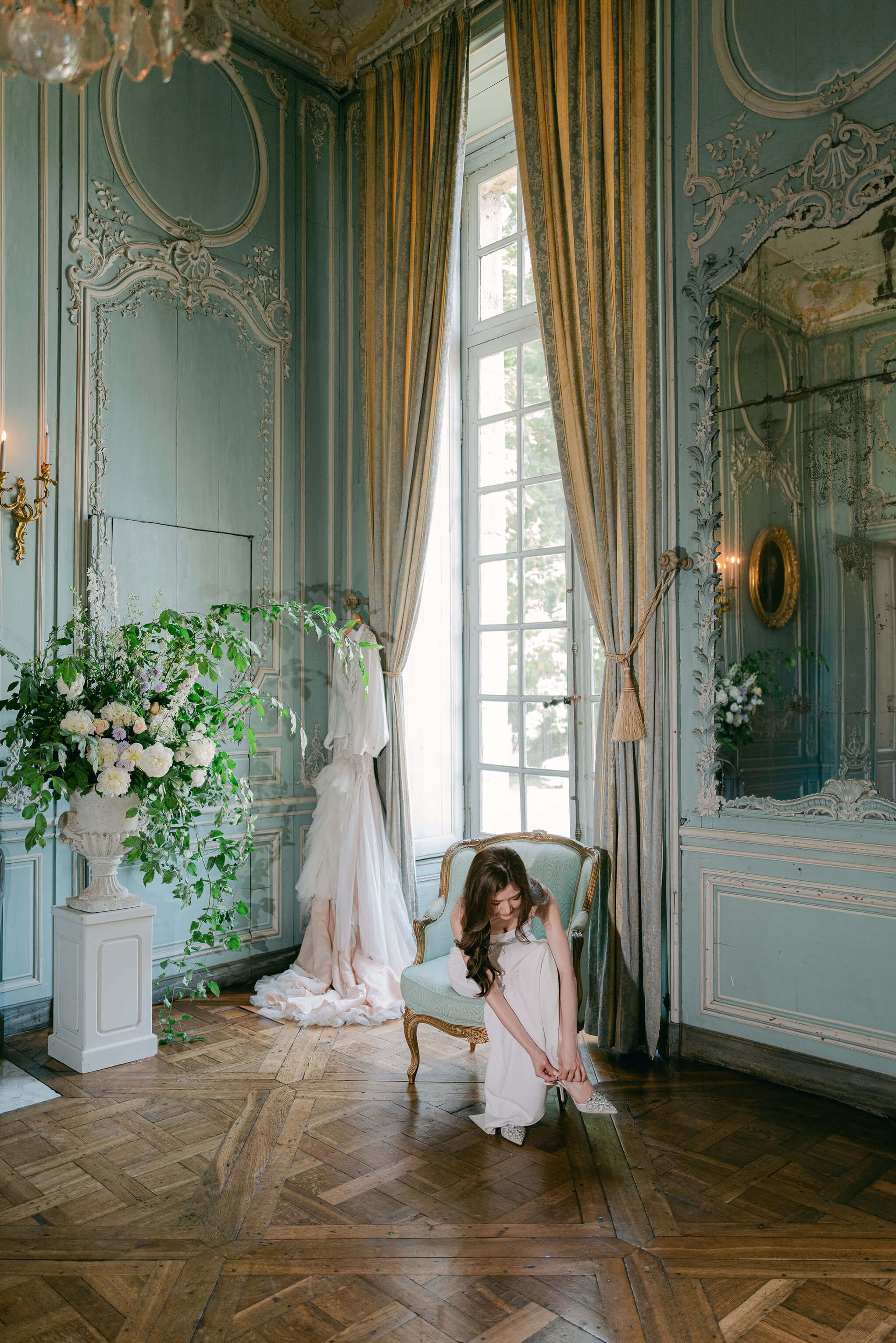
One of these installations was created around a fireplace in a pale blue salon, where Helen was later photographed.
The flowers framed her and left the room present around her.
Moving through different spaces during the wedding
One of the strengths of a Château de Champlâtreux wedding is the variety between the park and the interiors.
The long landscape perspective gives an outdoor ceremony a very clear structure. Inside, the fireplaces, wall colours and reception rooms create different settings for dinner, portraits and larger floral installations.
The property also includes eighteenth-century stables and the Saint-Eutrope chapel. The château states that the chapel is available for weddings as well as film and photography projects.
A wedding can therefore move through several parts of the estate, with each moment having its own atmosphere.
For the floral design, the challenge is to connect those spaces without repeating the same arrangement everywhere.
What to consider when planning a Château de Champlâtreux wedding
Where is Château de Champlâtreux?
The château is in Épinay-Champlâtreux, in the Val-d’Oise, north of Paris.
Its proximity to Paris and Charles de Gaulle Airport can make it practical for international guests. For larger groups, organised transfers can make arrivals and departures easier to coordinate. The venue gives approximate journey times of thirty minutes from central Paris and fifteen minutes from the airport.
Can a wedding ceremony take place outside?
Helen and Randy held their ceremony in the château park, using the long central perspective and the ornamental pond as part of the setting.
The scale of the grounds needs to be considered carefully. Small floral elements can quickly disappear in such a large landscape.
We look at the ceremony from several distances: from the beginning of the aisle, from the guest seating and from the position where the couple will stand. This helps us decide where the flowers need more height, volume or structure.
How should flowers work with the château interiors?
The interiors already have a strong visual language.
We consider the fireplaces, wall colours, height of the rooms and the way guests move between them. Each arrangement needs enough presence to belong in the space and enough breathing room around it.
A series of disconnected floral details would lose impact here. A few carefully placed installations create a clearer relationship with the architecture.
What should be considered for a summer wedding?
For summer wedding flowers at Château de Champlâtreux, the production plan needs to account for heat, hydration and installation timing.
Shade during preparation, suitable transport and the order in which the flowers are placed all affect how they hold during the celebration.
For this wedding, working from the cellar and moving the arrangements gradually made a considerable difference.
How can the different parts of the day connect?
The park and the reception rooms allow the wedding to move through several settings.
It helps to decide early how guests will travel from the ceremony to the cocktail and then into dinner. We can then create a floral direction that develops through the day, with each space feeling connected to the next.
What six days made possible
This wedding came together because the decisions were clear, the wedding planner trusted us and the team stayed calm as the schedule changed.
The short timeline set the pace. The flowers, the architecture and the experience of Helen and Randy received the same attention we bring to every project.
They walked into a ceremony in the park, followed by a cocktail and dinner filled with flowers created specifically for their day.
The cellar, the shade structure, the emergency blankets and the changes in timing remained backstage. That part of the wedding belonged to us.
Six days gave us enough time to create this.
With several months to prepare, there is more space to grow flowers specifically for the date, develop custom structures and work through every transition between the spaces in greater depth.
